How to Choose the Right Hot Rolled Steel Sheet in 2026?
Choosing the right Hot Rolled Steel Sheet starts with the job it must perform. A sheet used for a welded frame has different demands from one used for a formed bracket or a heavy equipment base. Consider the required grade, thickness, width, flatness, edge condition, and surface finish. Then check how the material will be cut, bent, welded, and protected from corrosion. Small details matter. A mill scale surface, for example, may need extra preparation before coating or painting.
Materials metallurgist John Speer’s work on steel processing offers a useful perspective. A practical paraphrase is: “Match the steel to its service conditions, not its label alone.” Treat that as a selection principle, not a verified direct quotation. Ask suppliers for grade documentation, dimensional tolerances, and traceability records. Compare those details with the part drawing and intended process. A low price can look attractive. It may prove costly if inconsistent thickness causes fit-up problems or extra machining. There is no single best sheet for every application. Even an experienced buyer can overlook a requirement. This guide explains how to compare options, evaluate trade-offs, and ask sharper questions before placing an order.
Define the Application and Performance Requirements
Before selecting a hot rolled steel sheet, describe what the part must do in service. A machine guard may need stiffness and clean edges, while a formed bracket must bend without cracking. Write down the expected loads, sheet thickness, bend radius, and fabrication method. Details matter. A quick sketch with marked holes and bends can reveal requirements that a grade name alone will not.
Consider the working environment, too. Indoor equipment may tolerate mill scale, but exposed parts may need cleaning and a protective coating. If the sheet will be welded, ask the fabricator about suitable chemistry and weld preparation. For repeated bending, specify the bend direction and radius, then confirm them against the supplier’s material data. Do not assume every hot rolled sheet behaves alike. Small variations can affect fit.
Set measurable limits for flatness, thickness, surface condition, and cutting tolerance before requesting a quote. These details influence both performance and cost. A tight tolerance may be useful for a fitted assembly, yet unnecessary for a rough support frame. It is easy to over-specify. Review the actual part, not an idealized drawing, and ask the fabricator which requirements are critical. Some choices only become clear after a trial piece.
Select the Steel Grade and Applicable Standards
Selecting a hot rolled sheet starts with the job, not a familiar grade name. For formed brackets, compare strength, ductility, and bend requirements; for welded frames, check weldability and section design. ASTM A1011/A1011M covers hot rolled carbon, structural, and high-strength low-alloy sheet. EN 10111 covers hot rolled low-carbon sheet for cold forming. These standards define different requirements. Not interchangeable by default.
Grade numbers alone can mislead. Match the specification to the intended use, then confirm yield strength, tensile strength, chemistry, thickness range, and surface condition on the material certificate. For example, a structural grade may offer useful strength but prove less suitable for a tight-radius bend. Ask for the applicable standard and edition, plus heat-number traceability; an EN 10204 3.1 inspection certificate may be appropriate when documented test results are needed. Details can drift.
The scale is substantial: World Steel Association’s World Steel in Figures 2025 reports 1,882.6 million tonnes of crude steel produced worldwide in 2024. That figure is not a sheet-quality measure, but it underscores why clear specifications matter across supply chains. A weak spot in many purchase requests is leaving tolerances vague. I would check them twice. Confirm whether the quoted thickness is nominal, how tolerances are applied, and whether the standard’s listed grade covers the actual forming or welding process. Specification is only useful when the shop can verify it.
Check Surface Condition, Tolerances, and Test Documents
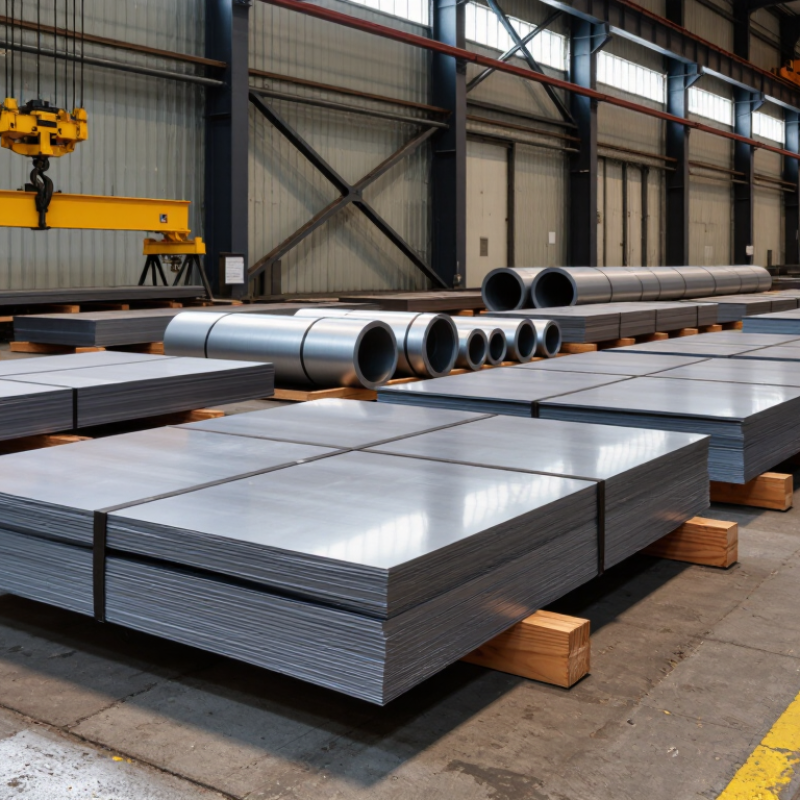
When choosing hot rolled steel sheet in 2026, inspect the surface under clear, even light. Unpickled sheet may carry mill scale, while pickled material should have a cleaner, more uniform appearance. Look for deep pits, laps, edge cracks, and patches that could affect welding, coating, or forming. Minor marks may be acceptable for structural use but costly on an exposed panel. Small details matter. Record defects with photos and note their location before accepting the shipment.
Check thickness, width, length, and flatness against the purchase specification, not just the nominal size. Measure several points across the sheet; readings near damaged edges can mislead. Use a suitable calibrated gauge, and confirm how the supplier defines measurement locations and permitted variation. Standards and tolerances differ by product and order. A quick check is useful, but it is not a substitute for agreed inspection criteria.
Request test documents that match the delivered material. A mill test certificate should identify the grade, heat number, chemical composition, and mechanical test results where specified. Match its heat number to the bundle tags and delivery paperwork. If figures appear inconsistent, pause and ask for clarification before processing the sheets. Paperwork can look complete and still refer to another batch; that is easy to overlook when schedules are tight.
Compare Suppliers, Lead Times, and Total Cost
A useful supplier comparison starts with the same specification sent to every bidder. List the required grade, thickness, sheet size, quantity, flatness tolerance, and surface condition. A quote for a different thickness is not a bargain. Ask whether the sheets are mill stock or cut to order, and request material test documentation with the shipment. Check how edges are protected; dented corners can create handling problems even when the steel itself meets spec.
Lead time means more than the date shown on a quote. Confirm whether material is physically available, when cutting begins, and how freight affects arrival. Ask for a realistic delivery window and updates if the order is delayed. A low price with an uncertain ship date may disrupt fabrication schedules. Still, promised dates can slip. Build in a buffer.
Compare total cost per usable sheet, not just the price per ton. Include cutting, packaging, delivery, unloading, and any minimum-order charges. If sheets arrive oversized, estimate the labor and scrap needed to trim them. One spreadsheet helps, but its assumptions may be wrong; verify freight and processing fees in writing. A slightly higher quote may cost less overall when it matches your dimensions and arrives ready for the next operation.
How to Choose the Right Hot Rolled Steel Sheet in 2026?
Compare indicative lead times and total-cost index by procurement route. Lower cost index is better; 100 represents the regional-mill scenario in this example.
How to use this: A local service center may deliver fastest, while a direct mill order can have a lower quoted price but a longer wait. The index is an illustrative planning scenario, not live market pricing. Compare current written quotes—including freight, processing, duties, and handling—and confirm lead times for your grade, thickness, quantity, and destination.