2026 Top GI Pipe Types for Global Buyers?
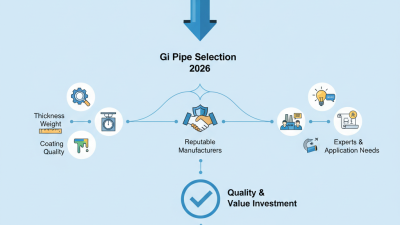
In 2026, global buyers will evaluate Gi Pipe beyond its purchase price. Coating quality, wall thickness, thread accuracy, and delivery reliability can decide whether a pipeline performs for years. The World Steel Association’s October 2025 Short Range Outlook reported uneven steel demand across major markets, with construction recovery differing sharply by region. That imbalance makes practical sourcing more important than a simple product ranking.
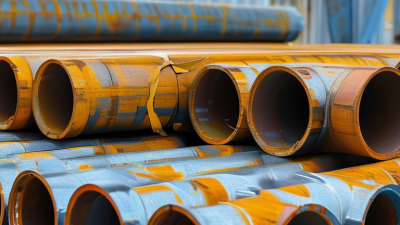
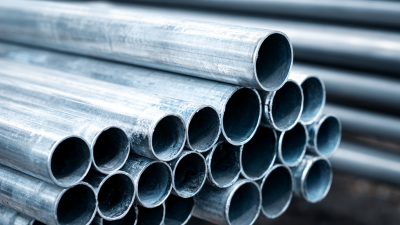
Galvanized steel pipes remain widely used for water distribution, agricultural irrigation, scaffolding, fire-protection systems, and structural frames. The International Zinc Association notes that zinc coatings protect steel through barrier protection and sacrificial action. In a humid warehouse, that protection may appear as a dull, continuous surface rather than bright silver metal. Buyers should inspect coating uniformity, cut-edge treatment, bundle labels, and mill test certificates before shipment.
Standards matter. ASTM A53 is common for pressure and structural applications, while EN 10255 covers suitable steel tubes for welding and threading. ISO 1461 provides requirements for hot-dip galvanized coatings on fabricated iron and steel products. These standards are not interchangeable in every project. A low-cost pipe can become expensive after rejected fittings, inconsistent threads, or premature corrosion. This guide compares the leading Gi Pipe types for global buyers, including hot-dip galvanized, pre-galvanized, seamless, welded, and threaded options. It considers coating method, strength, dimensions, application fit, inspection needs, and total delivered cost. No forecast is perfect. Local water chemistry, climate, installation practice, and certification rules can change the best choice. Careful buyers verify every assumption before signing a purchase order.
GI Pipe Classification for 2026: Welded, Seamless, and Coating Routes
2026 Top GI Pipe Types for Global Buyers?
GI Pipe Classification for 2026: Welded, Seamless, and Coating Routes
For global buyers, GI pipe selection starts with structure, not surface appearance. Welded pipe uses formed steel strip joined along a longitudinal seam. It often offers stable dimensions, broad availability, and lower production cost. Seamless pipe has no welded seam and suits higher-pressure or demanding service. Yet seamless does not automatically mean better. Wall thickness, chemistry, and inspection still control performance.
The coating route deserves equal attention. Hot-dip galvanizing creates a thicker zinc layer through immersion in molten zinc. It generally handles outdoor exposure better than thin electro-galvanized coatings. Electro-galvanizing gives a smoother finish but usually less zinc mass.
For water, scaffolding, irrigation, or structural lines, confirm the intended environment. Salt air changes the decision. Ask for coating mass or thickness, dimensional tolerances, and test records. A mill certificate alone may not reveal damaged threads or poor handling.
In practical purchasing, compare pressure class, connection method, and expected service life together. Check whether the pipe will be threaded, grooved, flanged, or welded onsite. Threading can reduce effective wall thickness at the connection. That detail is easy to miss.
I have seen buyers choose seamless pipe, then overlook a weak zinc coating. The reverse mistake also happens: a low-cost welded pipe faces excessive cyclic stress.
No classification works everywhere.
Some specifications remain vague, and that deserves challenge before production. A small sample inspection can expose ovality, bare spots, rough threads, or blocked ends. Leave room for revision.
Hot-Dip GI Pipes: ISO 1461 Zinc Thickness from 45–85 μm
Hot-dip galvanized pipes remain practical for global buyers because zinc protects steel from moisture and oxygen. World Steel Association’s World Steel in Figures 2024 recorded 1.89 billion tonnes of crude steel production in 2023. That scale supports broad pipe sourcing, but coating quality still depends on manufacturing control.
ISO 1461:2022 links zinc thickness to steel thickness, not simply pipe diameter. For steel over 6 mm, the required mean coating thickness is 85 μm, with a 70 μm local minimum. Steel from 3 to 6 mm requires 70 μm mean and 55 μm local thickness. Thinner sections may require 45–55 μm mean thickness. These figures explain the common 45–85 μm range. Local readings can be lower. That detail is often missed.
Ask for coating test records, sampling details, and gauge calibration evidence. Magnetic thickness gauges are useful, but poor surface preparation can still create bare spots or uneven zinc buildup. Check threaded ends, drain holes, welds, and cut edges carefully. The International Zinc Association’s technical publications also emphasize service life differences across rural, marine, and industrial atmospheres. Conditions matter greatly. A pipe with 85 μm zinc may perform poorly near salt spray if design and drainage are weak. Buyers should avoid treating the maximum thickness as automatic protection. That assumption is risky.
Pre-Galvanized GI Pipes: ASTM A653 Z120–Z275 Coating Classes
For global buyers, pre-galvanized GI pipes offer a practical balance between cost, appearance, and basic corrosion resistance. The steel sheet receives a zinc coating before it is formed into pipe. ASTM A653 coating classes Z120 to Z275 indicate the total zinc mass on both sides, measured in g/m². Z120 provides a lighter coating, while Z275 offers stronger protection in more demanding environments.
Check the number carefully. It is not the coating thickness on one side. Z275 is about 275 g/m² in total, not 275 microns. During forming, cutting, threading, and welding, exposed edges can lose part of that protection. This detail is often overlooked. Indoor frames, cable supports, light partitions, and general fabrication may suit Z120 or Z180. Outdoor exposure, humidity, and frequent handling usually justify Z275, but the highest class is not automatically the best choice.
A reliable purchase review should confirm pipe wall thickness, diameter tolerance, steel grade, coating mass, and inspection documents. Samples should show a consistent metallic surface, without peeling, heavy bare spots, or excessive zinc lumps. Cut edges deserve separate attention. They may need a compatible repair coating. One caution remains: pre-galvanized pipe is not identical to pipe galvanized after fabrication. For long outdoor service, buyers should compare both options instead of relying on the coating code alone. Mistakes happen when price becomes the only specification.
How to read the chart: ASTM A653 coating classes identify the minimum total zinc coating mass on both sides of the steel sheet. Higher coating mass generally provides greater zinc availability for corrosion protection. Actual coating thickness can vary by surface, processing conditions, and product specification.
Electro-Galvanized GI Pipes: 5–25 μm Coatings for Indoor Service
Electro-galvanized GI pipes deserve attention in the 2026 global market. Their zinc coating usually ranges from 5 to 25 μm, with a smooth, controlled finish. At zinc’s density of about 7.14 g/cm³, this equals roughly 36–179 g/m² on one surface. The process supports accurate dimensions, clean threads, and easier indoor installation.
The World Steel Association’s World Steel in Figures 2024 identifies construction as the largest steel-consuming sector, representing about half of global steel demand. That scale keeps practical corrosion protection important. ISO 2081 and ASTM B633 provide recognized guidance for electrolytic zinc coatings, including coating thickness and surface requirements. For dry interiors, electrical rooms, ceilings, and light mechanical systems, a 5–25 μm coating can be a reasonable specification.
Not for every environment.
Humidity changes the calculation. Condensation, salt exposure, chemical fumes, or damaged edges can shorten service life quickly. In field inspections, threaded ends and cut sections often deserve more attention than the pipe’s bright surface. A thicker coating is not automatically better if handling damages it. Buyers should verify coating thickness, adhesion, tube wall tolerance, and storage conditions before approval. The International Zinc Association also emphasizes that corrosion performance depends strongly on environment, not coating thickness alone. That point is easy to overlook.
2026 Top GI Pipe Types for Global Buyers? - Electro-Galvanized GI Pipes: 5–25 μm Coatings for Indoor Service
| Electro-Galvanized Coating Class |
Nominal Pipe Size |
Outside Diameter |
Typical Wall Thickness |
Nominal Zinc Thickness |
Recommended Indoor Service |
Key Buyer Considerations |
Common Technical Reference |
| SC1 / 5 μm |
DN15 / 1⁄2 in |
21.3 mm |
2.6 mm |
5 μm minimum class |
Dry indoor areas, light-duty conduit and general fabrication |
Lowest coating level; avoid condensation, water contact and abrasive handling |
ASTM B633 service-condition classification; ISO 2081 zinc-plating practice |
| SC1 / 5 μm |
DN20 / 3⁄4 in |
26.9 mm |
2.6 mm |
5 μm minimum class |
Dry interior supports, cable protection and non-exposed mechanical assemblies |
Suitable where appearance and basic indoor corrosion protection are required |
ASTM B633; ISO 2081 |
| SC2 / 8 μm |
DN25 / 1 in |
33.7 mm |
3.2 mm |
8 μm minimum class |
Normal indoor utility piping and equipment frames in low-humidity buildings |
Better protection than 5 μm for occasional indoor humidity, but not for standing water |
ASTM B633; ISO 2081 |
| SC2 / 8 μm |
DN40 / 1 1⁄2 in |
48.3 mm |
3.2 mm |
8 μm minimum class |
Indoor handrails, guards, supports and low-corrosion industrial interiors |
Confirm dimensional tolerance, threading and end protection before shipment |
ASTM B633; EN 10255 dimensional practice where applicable |
| SC3 / approximately 12–13 μm |
DN50 / 2 in |
60.3 mm |
3.6 mm |
12–13 μm nominal class |
Warehouses, workshops and indoor areas with intermittent humidity |
Offers a practical balance between coating protection, cost and surface appearance |
ASTM B633 SC3; ISO 2081 |
| SC3 / approximately 12–13 μm |
DN80 / 3 in |
88.9 mm |
4.0 mm |
12–13 μm nominal class |
Indoor structural bracing, service frames and larger utility assemblies |
Use additional sealing or paint protection at cut edges and threaded areas |
ASTM B633 SC3; EN 10255 dimensional practice where applicable |
| SC4 / 25 μm |
DN100 / 4 in |
114.3 mm |
4.5 mm |
25 μm minimum class |
Humid indoor service, plant rooms and interiors with frequent condensation |
Highest listed electro-galvanized class; still not a substitute for hot-dip galvanizing outdoors |
ASTM B633 SC4; ISO 2081 |
Global Buyer Selection: DN15–DN300, ASTM A53, and EN 10255
Global Buyer Selection: DN15–DN300, ASTM A53, and EN 10255
GI pipe selection starts with service conditions, not only nominal diameter. DN15 works for compact water branches and instrument lines. DN300 suits major distribution headers and industrial utilities. Remember this: DN is nominal, not the actual outside diameter. Wall thickness, pressure, and connection type still control performance.
ASTM A53 fits many welded or seamless applications. It supports black and galvanized pipe, with Grade A or Grade B options. EN 10255 mainly covers tubes designed for threading and welding. Its commonly used range reaches DN150, so DN200–DN300 buyers should verify another dimensional standard. This detail is often missed. It can create costly mismatches between pipe, fittings, and cutting tools.
The World Steel Association reported about 1.89 billion tonnes of crude steel production in 2023, showing supply-chain scale. OECD steel market reports also describe continuing demand pressure in construction and infrastructure. Buyers should request mill certificates, coating mass results, dimensional records, and hydrostatic test data. For outdoor service, inspect zinc coverage around threads and weld areas. In procurement reviews, I have seen catalog descriptions treated as complete specifications. They are not. A better purchase document states DN, schedule or wall thickness, grade, standard edition, end finish, coating requirement, test method, and acceptable tolerances. Even then, local code approval deserves a final check.