

Outlook for Europe's Solar Market: New Green Growth Opportunities Driven by Policies and Demand
As a core hub for global energy transition, Europe's photovoltaic (PV) market is in a critical development phase driven by both policy dividends and market demand. Backed by firm policy guidance under the "carbon neutrality" goal, abundant potential for application scenarios, and continuous empowerment from technological innovation, the European PV industry, despite short-term adjustment pressures, boasts a clear long-term growth logic. It will remain one of the world's most dynamic PV markets, offering broad development space for the green energy industry chain.
The policy framework is continuously improving, laying a solid foundation for PV development. The EU's "Green Deal" explicitly sets a binding target of increasing the share of renewable energy to over 42.5% by 2030, with PV, as a core pillar of clean energy, shouldering high expectations. As early as the RepowerEU plan, the EU established phased goals of achieving 320GW of PV installed capacity by 2025 and approaching 750GW by 2030, providing clear growth expectations for the market. In terms of policy implementation, the EU is removing development barriers by simplifying approval processes, strengthening grid infrastructure construction, and promoting skilled talent training. Meanwhile, many countries continue to stimulate PV investment vitality through market-oriented tools such as auction mechanisms and Power Purchase Agreements (PPAs). Additionally, if Central and Eastern European countries align their national renewable energy strategies with EU policies, they can leverage at least 136 billion euros in public funding support, injecting strong momentum into the regional PV industry.
The market scale is steadily expanding with diversified structural characteristics. Data shows that the EU has successfully achieved the 2025 PV installed capacity milestone of 320GWac (400GWdc), and in June 2025, solar energy became the largest power source in the EU for the first time, accounting for 22% – marking the official establishment of PV's core position in Europe's energy structure. Although Europe's PV market experienced its first contraction in a decade in 2025 (newly installed capacity of 65.1GW, a year-on-year decrease of 0.7%), this is more a phased adjustment after the high-speed growth post-energy crisis rather than a trend reversal. In terms of market structure, utility-scale PV maintains strong growth, with its share of new capacity exceeding half in 2025, becoming the core support for market growth. While residential PV saw a short-term decline due to the withdrawal of subsidies in some countries, long-term demand still has room for recovery amid lingering memories of high electricity prices and enhanced awareness of energy independence.
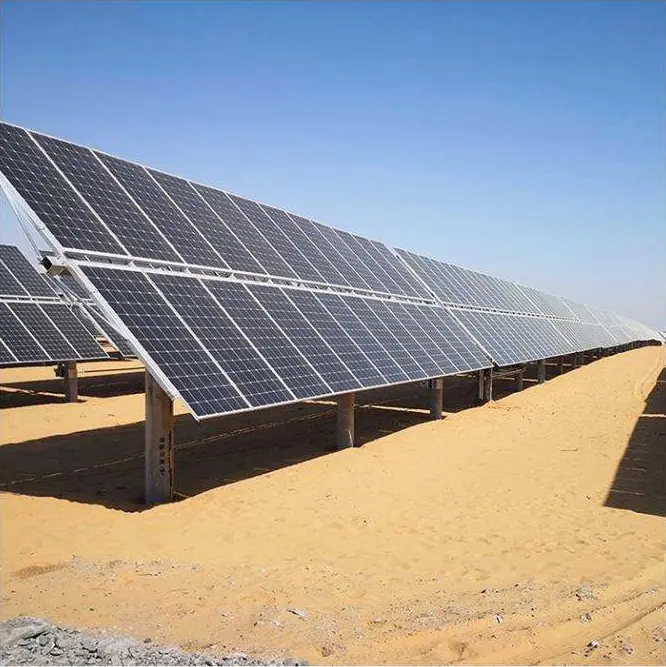
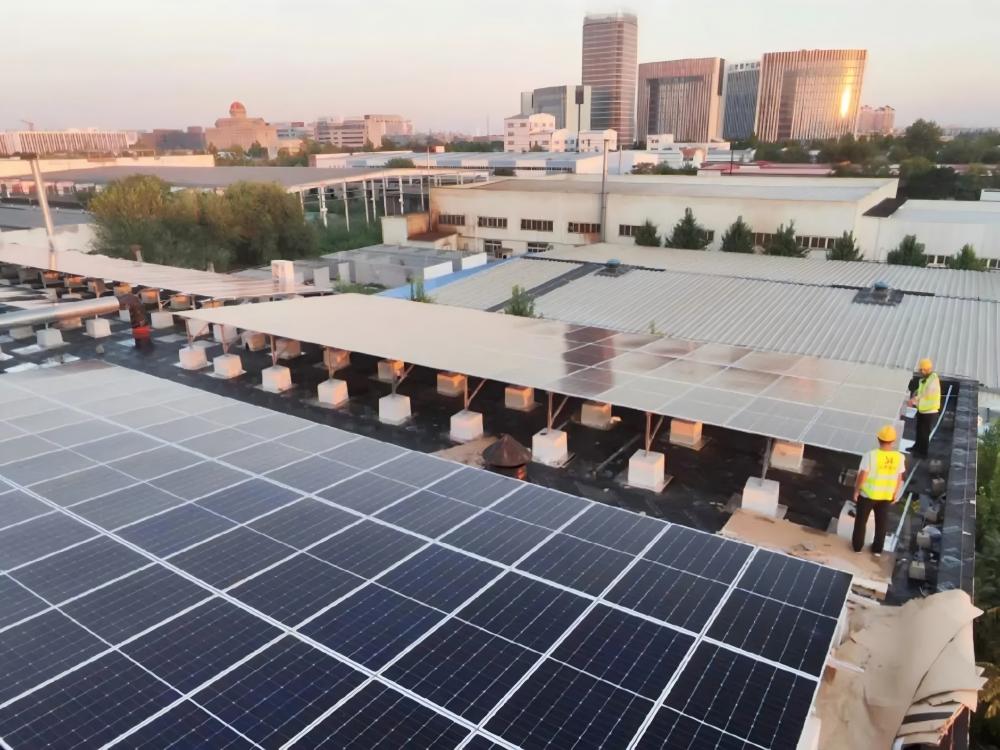
Regional potential is being released in a differentiated manner, with broad space for full-scenario applications. Different regions in Europe have formed distinctive PV development paths based on their own resource endowments and demand characteristics. Southern European countries such as Spain and Italy, with abundant solar resources, have become core layout areas for large-scale ground-mounted PV plants, while demand for high-efficiency PV technologies in high-temperature environments continues to rise. Central European countries like Germany and Poland focus on distributed PV and industrial/commercial applications; Poland's PV installed capacity target could reach 58.2GW by 2030 under an ambitious scenario, showing enormous growth potential. Despite cold climates, Northern Europe has made breakthroughs in building-integrated PV and power supply for remote areas through the application of low-temperature-resistant PV technologies. Eastern European countries such as Romania and Bulgaria promote large-scale development of PV resources through cross-border energy project cooperation. Additionally, with the coordinated development of energy storage and PV technologies, Europe's PV application scenarios are extending from single power generation to diversified forms such as "PV-storage-charging" integration and virtual power plants, further expanding market growth space.
Technological innovation and system optimization are key, with sufficient long-term growth drivers. Currently, Europe's PV market is transitioning from scale expansion to quality improvement, with high-efficiency modules, intelligent operation and maintenance, and enhanced system flexibility becoming industry priorities. High-efficiency module technologies such as N-type TOPCon are seeing increasing penetration in the European market due to their power generation efficiency advantages. Meanwhile, to address challenges such as grid congestion and electricity price volatility, the deployment of supporting technologies including battery energy storage, demand response, and grid digital upgrading has accelerated significantly, serving as core support for ensuring PV absorption and improving project economics. In the long run, the urgency of Europe's energy security transition, volatility in fossil energy prices, and the continuous decline in PV costs will jointly constitute the core drivers of market growth. Despite current short-term adjustments, SolarPower Europe analysis indicates that with timely policy efforts to address structural bottlenecks, Europe's PV market is expected to return to a growth trajectory, providing core energy support for achieving the 2050 carbon neutrality goal.
Overall, Europe's PV market is in a critical transition phase from high-speed growth to high-quality development. Policy continuity, technological innovation, and system adaptability will determine the future growth rhythm. For the green energy industry chain, this presents both challenges and opportunities. Focusing on the differentiated needs of different European regions and providing efficient, reliable, and adaptable PV technologies and solutions will help seize opportunities in this promising market and jointly build a green energy future.