Leave Your Message

China Top Deformed Bar Manufacturers and Suppliers

China’s deformed bar industry supports bridges, apartment towers, factories, and high-speed rail projects worldwide. Deformed Bar is not merely shaped steel. Its rib pattern improves mechanical bonding with concrete, especially around heavily loaded columns and beams.

The World Steel Association reported global crude steel production of about 1.88 billion tonnes in 2024. China produced roughly half of that volume. This scale gives Chinese manufacturers strong advantages in billet sourcing, rolling capacity, export logistics, and production consistency. However, volume alone does not prove quality. That distinction deserves attention.

The OECD’s steel market reports continue to highlight excess capacity, weak demand, and intense international competition. These pressures can influence quotations, lead times, and supplier behavior. Buyers should examine mill certificates, heat numbers, tensile results, elongation, and independent inspection records. Small details matter. A missing traceability document can create expensive uncertainty on site.

World Steel Association Director General Edwin Basson has described steel as “the most recycled material in the world.” His observation reinforces steel’s long-term value, but recyclability cannot replace engineering compliance. Reliable suppliers still need to meet applicable standards, including GB/T 1499.2, ASTM A615, or BS 4449, depending on the project location.

This guide reviews leading China Deformed Bar manufacturers and suppliers through practical criteria. These include factory capability, export experience, certification, testing systems, customization, and after-sales support. Product names can look impressive. Factory evidence is stronger.

Some rankings may remain debatable. Market data changes, and supplier performance can vary between batches. Therefore, procurement teams should verify current certificates, inspect production facilities, and compare delivered performance—not only catalog prices.
China Top Deformed Bar Manufacturers and Suppliers

What Are Deformed Bars and How Are They Used in Construction?

Deformed bars are steel reinforcement rods with raised ribs along their surface. These ribs help the bar grip surrounding concrete and reduce slipping under load. Concrete handles compression well, but it is weak in tension. Deformed bars help carry tensile forces in beams, slabs, columns, walls, and foundations.

On a construction site, workers cut and bend bars according to approved drawings. They place them inside forms before concrete is poured. Plastic or concrete spacers maintain the required cover, protecting steel from moisture and corrosion. Bar diameter, spacing, lap length, and placement all affect structural performance. A small positioning error can reduce the intended strength, even when the concrete looks flawless.

Quality control should include checking mill certificates, bar markings, rib patterns, dimensions, and visible rust. Light surface rust may not be serious, but loose scale needs attention. Bars should remain supported and tied during pouring, not rest directly on soil. In practice, drawings are sometimes interpreted too quickly. That is where careful inspection matters. A practical engineer also checks congestion around joints, because tightly packed reinforcement can prevent concrete from flowing properly. The best result is not simply more steel; it is correctly specified, accurately placed, and fully surrounded by sound concrete.

China’s Deformed Bar Grades, Standards, and Manufacturing Processes

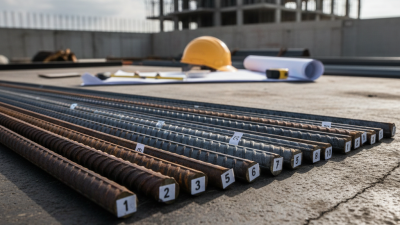
China’s deformed bar market covers several grades, standards, and production routes. HRB400E remains widely selected for reinforced concrete structures. HRB500E and HRB600E provide higher strength when design calculations permit them. The “E” suffix usually indicates improved seismic performance requirements under Chinese standards. Buyers should verify the project’s design code before choosing a grade.

Chinese production commonly begins with tested steel billets. Mills reheat the billets, roll them through shaped grooves, and form continuous ribs. Controlled cooling can improve strength while preserving useful ductility. Each batch should receive chemical analysis, tensile testing, bend testing, and dimensional inspection. GB/T 1499.2 is a key Chinese reference for hot-rolled ribbed bars. Some projects instead require ASTM A615, BS 4449, or another international standard. These standards are not automatically interchangeable.

Tips: Request the exact standard, grade, bar diameter, heat number, and inspection certificate. Confirm rib geometry and mass tolerance, not only yield strength. Independent testing adds confidence for large orders. Check mill markings against packing lists and shipping documents. In practice, certificates can look complete yet miss traceability details. That deserves careful review. A lower price may also reflect different testing depth, not better efficiency. Suppliers with documented process controls and consistent test records are easier to audit and assess.

China Top Deformed Bar Manufacturers and Suppliers - China’s Deformed Bar Grades, Standards, and Manufacturing Processes

Category Data Dimension Reference Data Standards and Practical Notes
Product Definition Product type Hot-rolled ribbed steel bar, commonly called deformed bar or rebar Used mainly for reinforced-concrete structures; longitudinal ribs improve mechanical interlock with concrete.
Chinese Standard Primary product standard GB/T 1499.2-2018, Steel for the Reinforced Concrete—Part 2: Hot Rolled Ribbed Bars The applicable edition and project specification should be confirmed before ordering.
Common Grades Standard strength grades HRB335, HRB400, and HRB500 The number generally identifies the specified minimum yield strength in MPa.
Seismic Grades Enhanced seismic ductility HRB335E, HRB400E, and HRB500E The “E” designation indicates additional requirements for strength ratios, ductility, and deformation performance.
Yield Strength Specified minimum yield strength HRB335: 335 MPa; HRB400: 400 MPa; HRB500: 500 MPa Actual test results must meet the applicable grade requirements in GB/T 1499.2.
Tensile Strength Specified minimum tensile strength HRB335: 455 MPa; HRB400: 540 MPa; HRB500: 630 MPa Tensile testing is normally performed according to GB/T 228.1.
Nominal Diameters Typical size range 6, 8, 10, 12, 14, 16, 18, 20, 22, 25, 28, 32, 36, 40, and 50 mm Availability may vary by production line, rolling schedule, and order quantity.
Nominal Mass Theoretical mass per metre m ≈ 0.00617 × d² kg/m, where d is the nominal diameter in mm For example, 12 mm bar is approximately 0.888 kg/m and 20 mm bar is approximately 2.47 kg/m.
Surface Geometry Ribs and rib spacing Two longitudinal ribs with transverse ribs arranged around the bar surface Rib height, spacing, angle, and relative rib area are controlled by the applicable product standard.
Raw Material Steelmaking feedstock Iron-bearing raw materials, recycled steel scrap, and alloying or refining additions The selected charge mix affects chemistry, cleanliness, energy use, and final mechanical properties.
Steelmaking Primary melting route Basic oxygen furnace or electric arc furnace, followed where required by ladle refining Ladle refining helps adjust chemical composition, temperature, and inclusion control.
Casting Semi-finished billet production Continuous casting into square billets, commonly followed by billet inspection Billet surface quality, internal soundness, dimensions, and heat identification are important controls.
Hot Rolling Rolling sequence Reheating, roughing, intermediate rolling, finishing, rib forming, and sizing Controlled rolling temperature and pass reduction influence dimensional accuracy and microstructure.
Cooling and Cutting Thermal treatment and length Controlled cooling on a cooling bed, followed by straightening, cutting, bundling, and tagging Thermo-mechanical treatment may be used to achieve strength and ductility targets without excessive alloy additions.
Mechanical Tests Acceptance testing Yield strength, tensile strength, elongation, and bend or reverse-bend performance Tensile testing is covered by GB/T 228.1; bend testing is covered by GB/T 232.
Chemical Inspection Heat chemistry and weldability control Carbon, manganese, silicon, phosphorus, sulfur, and other specified elements Carbon equivalent may be reviewed when welding, seismic design, or project specifications require it.
Supplier Documentation Traceability and delivery records Mill test certificate, heat number, grade, diameter, actual test values, quantity, and packing details Documents should correspond to the delivered bundles and the contractually specified standard.

Key Factors for Evaluating Chinese Deformed Bar Manufacturers

China’s large steel base offers strong sourcing potential, but volume does not prove deformed bar quality. World Steel Association data reported China’s crude steel production at about 1.005 billion tonnes in 2024. Buyers should examine each manufacturer’s actual rebar capacity, furnace route, rolling equipment, and export experience. A modern mill should provide heat numbers, chemical composition, yield strength, tensile strength, elongation, and bend-test results. These records should match GB/T 1499.2 or the buyer’s required international standard.

During factory audits, inspect billet storage, reheating control, rib geometry, and bundle marking. Ask for recent production records, not only polished certificates. ISO 9001 certification supports process control, but it cannot replace product testing. Independent inspection before shipment can verify dimensions, weight tolerance, surface condition, and mechanical performance. The International Trade Centre’s trade data can also help compare a supplier’s shipment history, destination markets, and product consistency. However, customs data may combine different steel products, so it requires careful interpretation.

Tips: Request samples from several heats and test them independently. Confirm mill certificates against laboratory results. Check whether the supplier can maintain quality during peak orders. A low price may reflect efficiency, or hidden risk. No checklist is perfect. Even experienced buyers can overvalue paperwork and underestimate packaging, port delays, or batch variation. Regular communication with the production team often reveals more than a sales presentation.

Leading Deformed Bar Suppliers and Their Product Capabilities

China’s leading deformed bar suppliers serve construction, infrastructure, and industrial projects worldwide. Their product ranges often include common carbon steel grades, varied diameters, and customized lengths. Experienced manufacturers understand how bar geometry affects concrete bonding and structural performance.

Strong suppliers control rib height, spacing, weight tolerance, and surface quality during rolling. They use chemical analysis, tensile testing, bend testing, and dimensional inspection for each production batch. Testing matters. Reliable documentation should include mill certificates, heat numbers, inspection records, and traceability from billet to shipment. Some factories also support third-party inspections before loading.

Production capacity differs widely. Large mills may handle recurring orders with stable monthly output, while smaller suppliers can respond faster to specialized sizes. Ask about furnace capacity, rolling equipment, bundle weight, packaging, and port arrangements. Details decide. Suppliers with export experience usually understand container limits, corrosion protection, and project-based delivery schedules. However, catalog claims deserve careful review. Published tolerances may not reflect every batch, and lead times can change during peak construction seasons. Request recent test reports and confirm standards in writing before approval. A capable supplier should answer technical questions clearly, not only offer a low price.

China Top Deformed Bar Manufacturers and Suppliers

Leading Deformed Bar Suppliers and Their Product Capabilities

This chart presents standard deformed bar sizes and their nominal mass per metre, illustrating the product range commonly supported by international reinforcing steel suppliers. Values are based on ASTM A615/A615M nominal bar size and unit-weight data; actual manufacturing ranges may vary by standard, grade, and mill capability.

How to Select and Source a Reliable Chinese Deformed Bar Supplier

China’s scale is impressive, but scale does not guarantee a dependable deformed bar supplier. The World Steel Association reported 1,019.1 million tonnes of Chinese crude steel production in 2023. This capacity supports broad sourcing options, yet it also makes supplier screening essential. Start with the required standard, such as GB, ASTM, or EN, and match every quotation to your project’s grade, diameter, length, and tolerance requirements.

Ask for recent mill certificates, heat numbers, chemical composition, yield strength, tensile strength, and elongation results. A reliable supplier should connect each bundle to a traceable production record. Independent inspection can verify bar diameter, rib geometry, surface condition, weight, and loading practices. The OECD’s steel market reports also highlight continuing global overcapacity concerns, so unusually low prices deserve careful questioning. Cheap steel may reflect efficient production, but it may also hide weaker testing or inconsistent sourcing.

Request production photos, sample testing, export experience, and a clear packing specification. Confirm whether certificates come from the actual mill or only from a trader. I would not rely on a polished spreadsheet alone. A spreadsheet can look perfect. Compare sample results with certificate values, check communication speed, and review how the supplier handles a failed inspection. That small conversation often reveals more than a sales presentation. Mistakes happen, even with experienced buyers; documented controls reduce their cost.