Leave Your Message
Choosing a Roofing Sheet supplier is not just a price comparison. The right choice depends on the building, exposure, installation method, and expected service life. A coastal warehouse faces different corrosion risks from a farm building inland. Small details matter: coating thickness, steel grade, profile depth, and the quality of edge finishing.
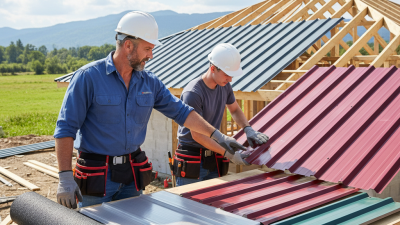
Building scientist Joseph Lstiburek is often quoted as saying, “All buildings are perfect until they get wet.” His reminder is relevant here. A sheet’s performance depends not only on its material, but also on drainage, flashing, fasteners, and installation. No manufacturer can compensate for poor detailing. Even strong specifications need verification.
This guide to China Top 10 Roofing Sheet Manufacturers offers a starting point for comparing suppliers. It considers product range, manufacturing capability, quality documentation, customization, and export support. Rankings can be imperfect; available evidence and buyer priorities differ. Treat each profile as a shortlist, not a guarantee. Request current test reports, confirm material specifications, and ask how coatings are checked during production. Then compare quotations on the same basis. A low price can look attractive on paper. The details tell the fuller story.
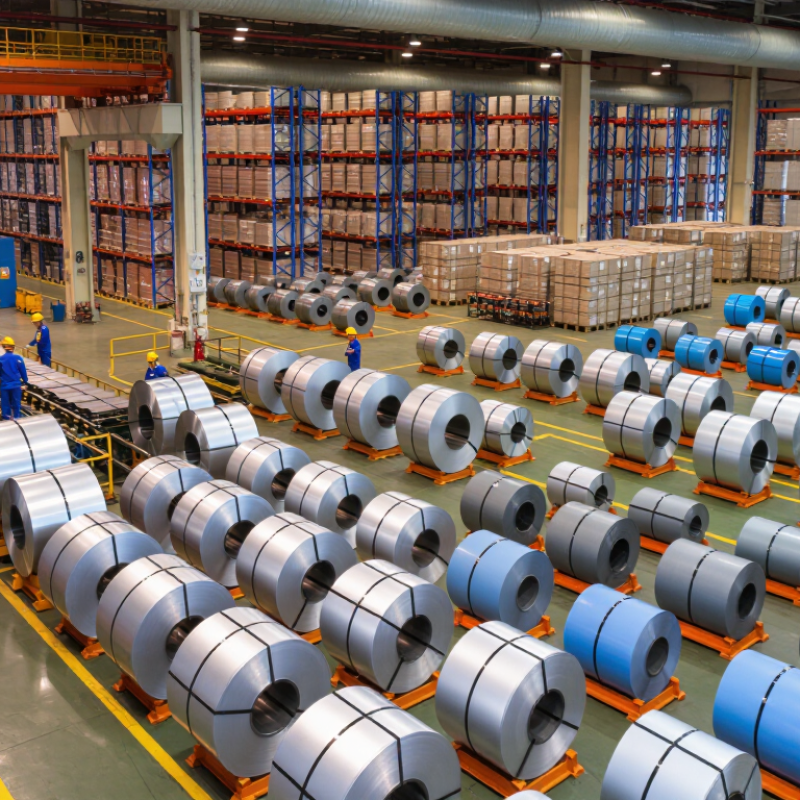
China’s roofing-sheet industry rests on a deep steel supply base, but steel output is not roofing output. The World Steel Association’s World Steel in Figures 2025 records 1,005.1 million tonnes of Chinese crude steel production in 2024, about 53.4% of the global total. This scale supports wide availability of galvanized and pre-painted steel coil, alongside roll-forming capacity for corrugated, trapezoidal, and standing-seam profiles. Scale matters. Yet coating uniformity, base-metal thickness, and cut-edge protection affect how sheets perform after installation.
Demand is less straightforward. National Bureau of Statistics of China data show that newly started building floor area fell 23.0% in 2024, to 738.93 million square metres. This is a construction indicator, not a roofing-sales measure; industrial sheds, renovations, and rural projects may follow different trends. Buyers and engineers should compare stated and measured thickness, then check coating mass, paint system, profile dimensions, and test documentation. Ask for batch-level records. A tidy sample can hide variation across a full coil. Manufacturing capability matters, but consistency through coating, forming, packing, and delivery still needs verification.
Industry overview: common roofing-sheet materials, product specifications, standards, and applications. The ranges below are indicative of products commonly available in the market; actual specifications vary by manufacturer, profile, project requirements, and applicable standards.
| No. | Industry Dimension | Common Product Data | Notes |
|---|---|---|---|
| 1 | Main sheet materials | Prepainted galvanized steel, prepainted zinc-aluminum-coated steel, aluminum-zinc alloy-coated steel, and aluminum sheet | Steel products are widely used for industrial, commercial, and agricultural roofs; aluminum is selected for projects requiring lower weight or specific corrosion performance. |
| 2 | Base-metal thickness | Approximately 0.12–1.5 mm for many roll-formed steel roofing products | Availability depends on the profile, intended structural use, and supplier. Confirm whether a quoted thickness refers to base metal thickness or total coated thickness. |
| 3 | Metallic coating | Zinc-coated and zinc-aluminum-coated options; coating mass is specified by product grade and standard | Coating designations and test methods differ by coating type. Compare the stated coating specification rather than relying on a generic description such as “galvanized.” |
| 4 | Paint system | Factory-applied primer and topcoat; common topcoat chemistries include polyester, SMP, and PVDF | Coating selection affects appearance, weathering performance, and maintenance needs. Performance should be checked against the product data sheet and project environment. |
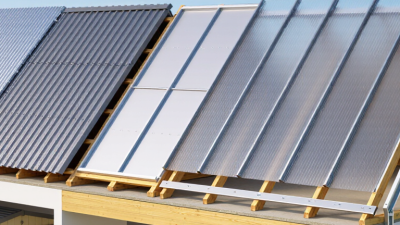
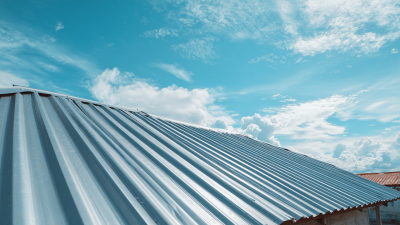
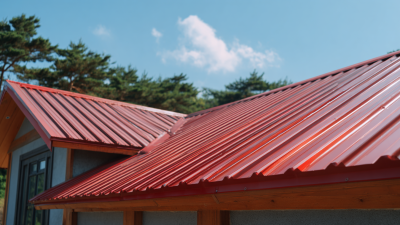
| 5 | Profile formats | Corrugated, trapezoidal / ribbed, and standing-seam profiles | Profile geometry influences drainage, stiffness, lap details, and compatibility with the supporting structure. |
| 6 | Sheet width | Overall and effective cover widths vary by profile; effective width is commonly narrower than the unformed sheet width | Use the profile drawing and effective cover width for roof-area calculations and installation planning. |
| 7 | Sheet length | Often cut to project-specific lengths within equipment, transport, and handling limits | Longer sheets can reduce end laps but require suitable transport and careful lifting to avoid deformation. |
| 8 | Applicable Chinese standards | GB/T 12754-2019 for prepainted steel sheet and strip; GB/T 2518-2019 for continuously hot-dip zinc-coated steel sheet and strip | Confirm the current edition, product scope, and any additional project or export-market requirements when specifying materials. |
| 9 | Common applications | Factories, warehouses, workshops, farm buildings, canopies, and selected commercial buildings | Selection should account for local wind, rain, snow, corrosion exposure, roof pitch, and structural design. |
| 10 | Key purchasing checks | Base-metal thickness, coating specification, paint system, profile drawing, effective cover width, and inspection documentation | Request written specifications and verify that samples, certificates, and delivered material correspond to the purchase requirements. |