Leave Your Message

China Top Steel Bar Manufacturers Which One to Choose?

Choosing among China’s top Steel Bar manufacturers requires more than comparing prices or polished websites. Buyers must examine production capability, quality controls, export experience, and communication habits. A reliable manufacturer should provide clear mill certificates, heat numbers, chemical composition, and mechanical test results. These details connect each bundle to a traceable production record.

Real purchasing experience often reveals what brochures omit. Factory audits can show whether storage yards are dry, labels remain readable, and bars are protected from surface damage. A serious supplier should explain its rolling process, inspection points, packaging method, and loading plan. Ask about rebar grades, diameters, tolerances, surface conditions, and applicable standards before requesting a quotation. Small details matter.

No supplier is perfect.

Even experienced buyers can overlook delivery risks when focusing on unit cost. A low offer may exclude testing, inland transport, seaworthy packing, or documentation. That difference becomes expensive when a project faces delays or failed inspections. Manufacturers with consistent quality systems, responsive engineers, and verifiable overseas references deserve closer attention. However, online reviews alone are not enough. Independent inspection can provide stronger evidence.

This guide compares practical criteria for selecting a Chinese Steel Bar manufacturer with greater confidence. It considers product quality, factory capacity, certifications, customization, lead time, pricing transparency, and after-sales support. The final choice should match the project’s technical requirements, risk tolerance, and delivery schedule. Careful evaluation takes time, but rushed procurement usually costs more.

China Top Steel Bar Manufacturers Which One to Choose?

Types of Steel Bars and Their Main Applications

China Top Steel Bar Manufacturers Which One to Choose?

Types of Steel Bars and Their Main Applications

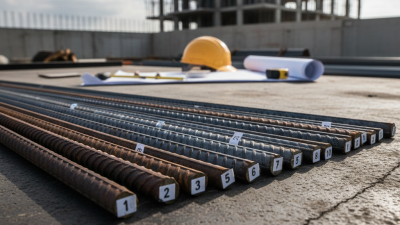
Steel bar selection should begin with load, shape, and site conditions. Ribbed reinforcing bars bond strongly with concrete. They are common in columns, beams, foundations, and high-rise slabs. Plain round bars suit ties, small frames, pins, and low-stress assemblies. Prestressing steel strands support long-span bridges and precast floors. Hot-rolled bars also serve machinery parts, rails, and structural connections. The choice is rarely obvious.

The World Steel Association’s World Steel in Figures 2025 reports 1,882.6 million tonnes of crude steel production in 2024. This scale shows steel’s continuing importance in construction and manufacturing. Yet production volume does not prove product suitability. Engineers must check yield strength, elongation, weldability, diameter tolerance, and corrosion performance. Relevant standards, including ASTM and EN specifications, define testing requirements. A bar can look perfect and still fail poor storage or incorrect bending. That practical risk is often underestimated.

Tips: Match the bar grade to the design drawings, not only the price. Request mill certificates, mechanical test results, and heat numbers. Store bars above wet ground. Remove heavy rust, oil, and loose scale before installation. I would also verify independent test reports when an order is unusually cheap. Cheap steel may become expensive after delays, rework, or structural concerns.

Key Standards for Evaluating Steel Bar Manufacturers in China

China Top Steel Bar Manufacturers: Which One to Choose?

Choosing a steel bar manufacturer requires more than comparing prices or production capacity. Start by checking whether the factory follows the required GB/T, ASTM, or EN standards for your project. A reliable supplier should provide current mill test certificates, chemical composition data, and tensile test results. These documents must match the actual heat number printed on the bundled bars.

Traceability matters. Ask how the manufacturer controls raw materials, rolling temperatures, bar diameter, rib geometry, and batch records. During an online audit, request production videos, laboratory images, and sample inspection reports. Better still, arrange independent testing before shipment. Check yield strength, tensile strength, elongation, bend performance, and dimensional tolerance. Small deviations can create installation problems on site.

Do not trust polished catalogs alone.

A dependable manufacturer should explain rejected-batch procedures and corrective actions clearly. ISO 9001 certification can show process discipline, but it cannot replace product testing. Review export experience, packing methods, loading photographs, and communication records. Slow replies may signal weak coordination, though this is not always true. I would also compare several samples instead of relying on one successful test. No evaluation method is perfect. Weather exposure, storage conditions, and local building rules may change the final choice. Ask practical questions, record every answer, and verify critical claims with evidence.

China Top Steel Bar Manufacturers: Key Standards for Evaluation

A practical way to evaluate steel bar manufacturers is to verify whether their products meet the mechanical-property requirements of GB/T 1499.2-2018. The chart compares the specified minimum yield strength and tensile strength of common hot-rolled ribbed rebar grades. Buyers should also review heat certificates, chemical composition, dimensional tolerances, bend and rebend test results, traceability, and independent inspection records.

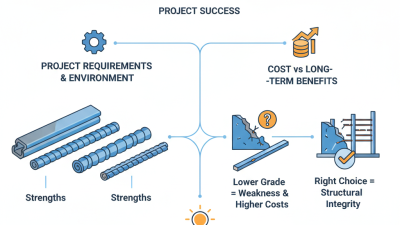
China’s Leading Steel Bar Manufacturers by Product Strengths

China’s leading steel bar manufacturers differ by product strength, not production volume alone. The World Steel Association reported China produced about 1.005 billion tonnes of crude steel in 2024. That scale supports broad manufacturing capacity, but capacity does not automatically prove consistency.

For construction projects, rebar specialists should demonstrate stable rib geometry, reliable yield strength, and controlled weldability. For wire rod, surface cleanliness and chemical consistency matter during drawing and fastening. Prestressed steel requires tight tensile control and low relaxation performance. Round-bar producers may be stronger in machining grades, where diameter tolerance and inclusion control affect final components.

Check the evidence closely. Request mill certificates, heat numbers, tensile results, bend-test records, and third-party inspection options. The ISO Survey 2023 recorded more than 1.2 million valid ISO 9001 certificates worldwide, showing that certification is common, but it is not a substitute for product testing. The OECD Steel Outlook 2024 also highlights continuing global pressure from excess capacity and weaker demand. Price can therefore look attractive while hiding uneven quality.

I would compare three recent production lots, not one sample. Small details matter.

A supplier may excel in seismic rebar but perform less consistently in precision wire rod. That weakness should be stated openly. The best choice is the manufacturer whose product strengths match the project’s actual stress, processing, and inspection requirements.

How to Compare Quality, Capacity, Prices, and Certifications

Choosing among China’s top steel bar manufacturers requires more than comparing quotation sheets. Quality starts with traceability. Ask for heat numbers, mill test certificates, chemical analysis, tensile results, and dimensional records. The World Steel Association reported about 1.89 billion tonnes of crude steel production worldwide in 2023, with China contributing roughly 1.02 billion tonnes. That scale creates options, but it does not guarantee consistent bar quality. Request recent third-party inspection reports, not only factory photographs. Small details matter, such as rib depth, straightness, bundle markings, and rust protection.

Capacity should be measured through verified output, rolling-mill lines, furnace access, and realistic delivery schedules. A large production claim may reflect group capacity rather than one facility. Check whether the quoted plant can supply your required grade every month. Prices also need careful comparison. Separate steel content, processing, testing, packing, inland freight, and shipping charges. Market data from the World Bank shows steel prices can change sharply with energy, raw material, and construction demand. The cheapest offer may hide weaker testing or longer lead times. Sometimes, the lowest price is not the lowest cost.

Certifications deserve practical checking. Confirm the certificate number, issuing body, scope, and expiry date. Relevant standards may include ISO 9001 for quality management and project-specific bar standards such as ASTM or EN requirements. Still, certification alone is imperfect. I would compare three recent batches, inspect loading procedures, and speak with previous buyers where possible. Reports provide direction, not certainty.

China Top Steel Bar Manufacturers Which One to Choose? - How to Compare Quality, Capacity, Prices, and Certifications

Use this evidence-based comparison matrix to evaluate reinforcing-steel-bar suppliers without relying only on quoted prices or marketing claims.
Dimension Comparison Metric Recognized Reference or Benchmark Evidence to Request Suggested Weight Selection Signal
Quality Yield strength and tensile performance EN 10080 B500B Minimum yield strength: 500 MPa; tensile-to-yield ratio: ≥ 1.08.

ASTM A615 Grade 60 Minimum yield strength: 60 ksi / 420 MPa; minimum tensile strength: 80 ksi / 550 MPa.
Heat-specific mill test certificate, independent laboratory report, and test results linked to the coil or heat number. 12% Pass only if the specified grade is met.
Quality Ductility and elongation For EN 10080 B500B, total elongation at maximum force, Agt, is typically specified at ≥ 5%.

Ductility requirements vary by standard, bar diameter, and grade.
Test values for elongation, bend test, and rebend test; confirm the exact standard and bar diameter covered. 8% Higher verified ductility supports seismic and deformation-sensitive applications.
Quality Chemical composition and weldability Carbon equivalent and alloy limits must comply with the selected standard. ASTM A706 is specifically designed for low-alloy, weldable reinforcing bars and seismic applications. Heat analysis, carbon-equivalent calculation, welding procedure guidance, and product standard declaration. 5% Essential where welding or seismic detailing is required.
Quality Dimensional accuracy and surface condition Verify nominal diameter, mass per metre, rib geometry, straightness, and visible absence of harmful cracks, laps, or excessive rust. Dimensional inspection records, mass-per-metre data, photographs, and pre-shipment inspection report. 5% Stable dimensions reduce fabrication and installation problems.
Capacity Verified production capability Compare the supplier's monthly available capacity in metric tonnes with the project requirement. Capacity should be separated into rolling, cutting, bending, and coating capacity where applicable. Production-line list, equipment capacity, recent 12-month shipment records, and current order-book availability. 8% Capacity is credible when supported by records, not only a website statement.
Capacity Schedule reliability and lot consistency Compare quoted lead time, on-time delivery history, minimum order quantity, batch size, and ability to maintain one approved grade across repeat shipments. Signed production schedule, delivery performance data, reference projects, and contingency plan for raw-material disruption. 7% A reliable schedule may be more valuable than the lowest unit price.
Capacity Traceability and order control Each shipment should be traceable from the bar bundle to the heat number, test certificate, production date, and shipping documents. Bundle labels, heat-number system, barcode records, packing list, and certificate-to-bundle matching sample. 5% Full traceability simplifies claims and project approval.
Price Comparable delivered cost Compare the same product basis: grade, diameter, length, quantity, packing, currency, and Incoterm. Use total delivered cost rather than mill price alone. Formal quotation showing product price, packing, inland freight, ocean freight, insurance, duties, inspection fees, and validity period. 10% Only comparable quotations should enter the final price ranking.
Price Price adjustment and validity risk Steel prices fluctuate with billet, scrap, energy, freight, exchange rates, and order timing. A quotation must state its validity period and adjustment mechanism. Price-validity clause, raw-material adjustment formula, currency terms, payment schedule, and surcharge list. 5% An unusually low price may exclude testing, packing, freight, or compliance costs.
Price Payment and commercial protection Assess advance-payment percentage, documentary requirements, inspection rights, warranty terms, liquidated damages, and dispute-resolution provisions. Draft sales contract, pro forma invoice, inspection clause, warranty clause, and payment-risk controls. 5% Balanced terms reduce financial exposure during large-volume orders.
Certifications Product-standard compliance Confirm the required market standard, such as EN 10080, BS 4449, ASTM A615, or ASTM A706. Standards are not interchangeable without engineering approval. Current certificate of conformity, product specification, test method, scope, and evidence that the certificate covers the exact product grade. 7% The certificate must match the project specification exactly.
Certifications Inspection documentation EN 10204 Type 3.1 is a commonly used inspection document for manufacturer-issued, heat-specific test results validated by an authorized inspection representative. Sample EN 10204 3.1 certificate, heat analysis, mechanical test results, inspection stamp, and document-control procedure. 4% Heat-specific documentation is stronger than a generic brochure certificate.
Certifications Management-system certification ISO 9001 Quality management
ISO 14001 Environmental management
ISO 45001 Occupational health and safety

These management standards do not, by themselves, prove that a steel bar meets a product standard.
Certificate number, certification body, scope, issue date, expiry date, and verification through the certification body where available. 4% Useful supporting evidence, but not a substitute for product testing.
Certifications Third-party inspection and market approvals Independent inspection may verify chemical analysis, mechanical tests, dimensions, quantity, marking, and packing before shipment. Additional approvals depend on the destination market and project specification. Inspection and Testing Plan, independent inspector report, sampling method, nonconformance records, and destination-market approval documents. 5% Particularly valuable for first orders or critical infrastructure projects.
Overall Decision Weighted supplier score Score each supplier from 1 to 5 for every criterion, multiply by the suggested weight, and compare the total out of 100 points. Keep a completed scorecard together with quotations, certificates, inspection reports, and contract terms. 100% Select the highest verified score, not automatically the lowest bid.
Recommended Decision Bands
Weighted Score Interpretation Recommended Action
85–100 Strong technical, commercial, and documentation position Suitable for final negotiation, subject to project-specific approval and pre-shipment inspection.
70–84 Generally acceptable, but one or more risks require control Request corrective evidence, clarify contract terms, and consider a trial order or third-party inspection.
Below 70 Material gaps in quality, capacity, price transparency, or certification Do not approve until missing evidence and commercial risks have been resolved.
Important: Steel prices, freight charges, production availability, and certification validity change over time. All quoted prices and supplier claims should be verified against the same delivery basis, current certificates, heat-specific test documents, and an independent inspection plan where appropriate.

Which Chinese Steel Bar Manufacturer Best Fits Your Project?

Choosing the right Chinese steel bar manufacturer depends on your project, not a popularity ranking. The World Steel Association reported China produced about 1.019 billion tonnes of crude steel in 2023. This scale offers broad capacity, but quality can vary between production lines.

Match the manufacturer to your actual requirements. Check bar grade, diameter tolerance, rib pattern, yield strength, bend performance, and coating needs. For reinforced concrete, request mill certificates and independent test results. Confirm compliance with GB/T 1499.2, ASTM A615, or your project’s specified standard. A serious supplier should provide heat numbers, batch traceability, and clear inspection records. Ask for recent samples, not only catalogue photographs. Small details matter on site.

Tips: Compare at least three quotations using the same specifications. Review factory audit findings, testing equipment, monthly capacity, and delivery history. Confirm whether quality checks occur before loading. The World Steel Association’s World Steel in Figures 2024 highlights China’s dominant steel output, yet production volume does not prove rebar consistency. I have seen projects focus too heavily on price. That approach often misses packaging damage, delayed documents, or uneven bar lengths. A better fit is the manufacturer that can repeatedly meet your drawings, testing plan, schedule, and communication expectations. Be willing to reject a low bid when evidence is incomplete.