
Leave Your Message
What Is the Best Hot Rolled Steel Sheet from China? The answer depends on the project, not on a single factory name. A reliable buyer examines grade, thickness tolerance, surface condition, mechanical properties, and delivery consistency. The strongest supplier is not always the cheapest one. That sounds obvious, yet price still dominates many purchasing decisions.
Edwin Basson, Director General of the World Steel Association, has said, “Steel is an essential material for our modern world.” His observation explains why product selection requires more than a catalog comparison. Hot Rolled Steel Sheet supports bridges, machinery frames, storage tanks, agricultural equipment, and many fabricated structures. Each application demands different performance. A construction project may prioritize yield strength and weldability. A forming application may need better elongation and cleaner edges.
Chinese mills can offer competitive pricing, broad production capacity, and several steel grades. However, quality can vary between suppliers, batches, and processing lines. Ask for mill test certificates, chemical composition, dimensional inspection data, and recent sample results. Confirm whether the sheet meets the required ASTM, EN, or JIS specification. Independent inspection can add confidence before shipment. Small details matter.
Surface scale matters too. So does flatness. A sheet that looks acceptable under warehouse lighting may reveal uneven edges after cutting. Buyers should also assess packing, moisture protection, traceability, and communication during production. No supplier is perfect. Even experienced purchasers can overlook one tolerance or accept unclear documentation. The best Hot Rolled Steel Sheet from China is therefore the product that consistently matches the application, verified standard, and practical inspection requirements.
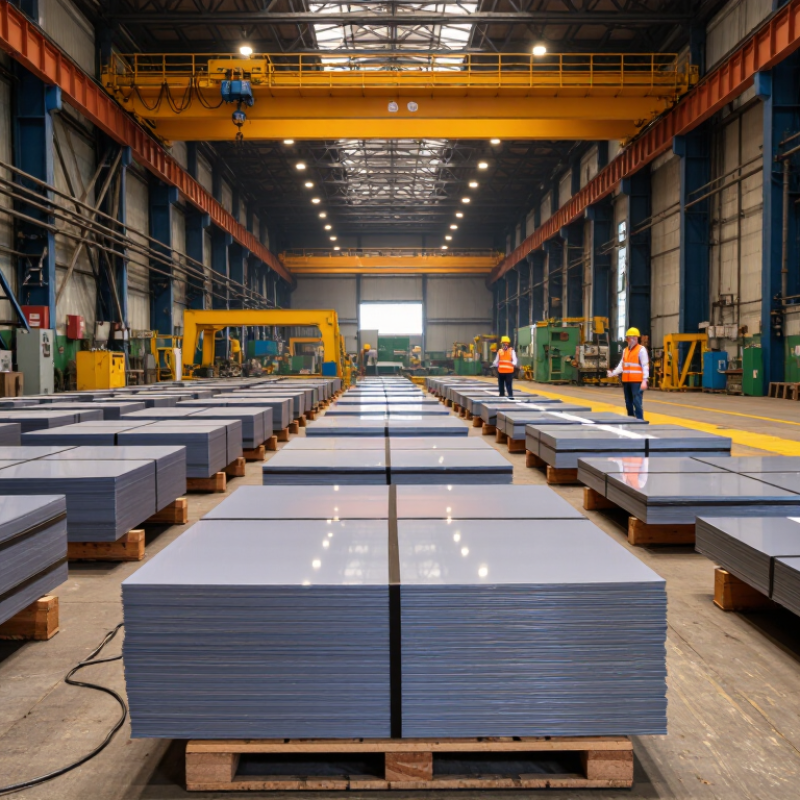
What Defines the Best Hot Rolled Steel Sheet from China?
The best hot rolled steel sheet is not defined by origin alone. It is defined by consistent chemistry, controlled rolling, and verified mechanical performance. In practical inspections, I check thickness at several points across each sheet. Small edge variations can affect welding, bending, and cutting accuracy. A reliable supplier provides mill test certificates with heat numbers, yield strength, tensile strength, elongation, and chemical analysis. These records should match the supplied material, not a generic template.
Surface condition also matters. Minor scale is normal after hot rolling, but deep pits, cracks, heavy laminations, and uneven edges deserve rejection or further testing. Buyers should compare requirements with recognized ASTM, EN, or ISO specifications. However, standards do not replace inspection. I have seen acceptable paperwork paired with inconsistent flatness. That experience makes physical sampling essential. No document is perfect.
Tips: Request sample sheets before bulk purchasing. Measure thickness with a calibrated gauge. Check flatness on a level table. Confirm coil or sheet dimensions, packing quality, and traceability. Ask for independent testing when the application involves structural loads or repeated forming. A useful supplier should answer clearly about production tolerances, corrective actions, and delivery records. The lowest price may look attractive, but unstable quality can create extra cutting waste, delays, and safety concerns.
| Evaluation Dimension | Recommended Benchmark | Typical Data or Requirement | Why It Defines a High-Quality Sheet | Verification Method |
|---|---|---|---|---|
| Applicable Standard | Clearly specified national or international standard | GB/T 709 for dimensions and shape; GB/T 700 for common structural grades; EN 10025-2 or ASTM A36 where required by the project | A defined standard establishes measurable requirements for chemistry, mechanical properties, dimensions, and surface quality. | Review the purchase specification, material certificate, and applicable standard edition. |
| Suitable Steel Grade | Grade selected according to load, forming, welding, and service conditions |
Q235B: minimum yield strength about 235 MPa; Q355B: minimum yield strength about 355 MPa; S275JR: minimum yield strength about 275 MPa; S355JR: minimum yield strength about 355 MPa |
The best sheet is not necessarily the strongest sheet; the correct grade provides the required performance without unnecessary cost or difficult fabrication. | Compare the specified grade with the design calculations and the test values on the certificate. |
| Yield Strength | Meets or exceeds the minimum value for the selected grade and thickness | Common structural grades range from approximately 235 MPa to 355 MPa minimum yield strength, depending on grade and thickness. | Yield strength indicates the stress level at which permanent deformation begins. | Verify tensile-test results from an accredited laboratory or a traceable mill test certificate. |
| Tensile Strength | Consistent with the selected grade standard | Typical ranges include approximately 370–500 MPa for Q235B, 470–630 MPa for Q355B, and 400–550 MPa for ASTM A36, subject to the applicable standard and thickness. | Adequate tensile strength helps the sheet resist rupture under applied loads. | Check certified tensile-test results and confirm the test direction and specimen location. |
| Chemical Composition | Within the limits of the selected standard | Carbon, manganese, silicon, phosphorus, and sulfur must remain within the specified grade limits; lower phosphorus and sulfur are generally preferred for weldability and toughness. | Controlled chemistry improves consistency, weldability, ductility, and resistance to brittle behavior. | Review heat analysis and product analysis on the material certificate. |
| Thickness Range | Thickness selected according to structural and fabrication requirements | Hot rolled sheet and plate are commonly supplied from about 1.5 mm upward; heavier sections are often classified as plate rather than thin sheet. | Correct thickness affects load capacity, weight, forming behavior, welding heat input, and total cost. | Measure several points across the sheet using a calibrated micrometer. |
| Thickness Tolerance | Tolerance class stated in the order | Tolerance depends on nominal thickness, width, standard, and whether ordinary or tighter tolerance is specified. | Tight and consistent thickness supports accurate cutting, bending, welding, and assembly. | Use calibrated measuring equipment and compare results with the ordered tolerance class. |
| Surface Condition | Uniform hot-rolled surface with no harmful defects | Minor mill scale may be normal; cracks, laminations, deep seams, excessive pitting, and defects that reduce the ordered thickness should not be accepted. | Good surface quality reduces rework, coating preparation, rejection risk, and premature corrosion problems. | Perform visual inspection, surface cleaning checks, and ultrasonic testing when internal lamination is critical. |
| Flatness and Shape | Complies with the dimensional and shape tolerance in the order | Flatness, edge waviness, squareness, and camber must be controlled according to the selected standard and tolerance class. | Accurate shape improves nesting efficiency, cutting precision, fit-up, and final assembly quality. | Inspect on a level surface and measure deviation with a straightedge, feeler gauge, or approved dimensional method. |
| Weldability | Controlled carbon equivalent and clean steel practice | Weldability depends on carbon equivalent, thickness, restraint, hydrogen control, and preheating requirements; it should be assessed rather than assumed from grade alone. | Good weldability reduces cracking risk and improves fabrication productivity. | Review chemistry, calculate carbon equivalent where applicable, and qualify the welding procedure. |
| Toughness Requirement | Impact toughness specified when low-temperature or dynamic service is expected | JR grades commonly indicate Charpy impact testing at +20°C; lower-temperature applications may require grades with a different impact designation. | Adequate toughness helps prevent brittle fracture under impact or low-temperature conditions. | Confirm Charpy V-notch test temperature and absorbed-energy results when required. |
| Traceability | Every bundle or sheet is traceable to a heat or batch | The certificate should identify the grade, heat number, dimensions, quantity, test results, and delivery information. | Traceability supports quality audits, claims management, fabrication control, and regulatory compliance. | Match bundle markings, labels, packing lists, and certificates before processing. |
| Inspection and Testing | Independent or witnessed inspection for critical applications | Testing may include chemical analysis, tensile testing, bend testing, impact testing, dimensional inspection, and ultrasonic examination where specified. | Independent verification reduces the risk of undocumented nonconformity before shipment or fabrication. | Use an agreed inspection and test plan with defined sampling, acceptance criteria, and reporting. |
| Packaging and Corrosion Protection | Packaging suitable for sea transport and storage conditions | Use stable stacking, moisture-resistant wrapping, edge protection, secure strapping, and clear identification; mill scale is not a substitute for corrosion protection. | Proper packaging helps prevent rust staining, edge damage, bending, and loss of identification during transport. | Inspect packaging, moisture exposure, bundle stability, and markings at loading and arrival. |
| Best Overall Selection | A balanced match between specification, performance, consistency, and delivered cost | The optimum sheet meets the required grade and tolerances, has reliable test documentation, acceptable surface quality, secure packaging, and consistent batch performance. | “Best” is application-dependent; the lowest purchase price does not necessarily provide the lowest total cost. | Evaluate technical compliance, inspection results, logistics, processing yield, and total delivered cost together. |
Note: Mechanical-property values are representative minimums or commonly specified ranges and may vary with the applicable standard, product thickness, testing method, and delivery condition. The purchase specification should always control.