What Is the Best ERW Steel Pipe for Buyers in 2026? The answer depends on where the pipe will work, what it must carry, and how closely its dimensions match the design. A line exposed to moisture has different needs from a dry indoor frame. Wall thickness, outside diameter, steel grade, weld quality, and end finish all matter. A low price can look convincing until installation reveals ovality, rough weld seams, or inconsistent lengths.
For this guide, one point matters: I cannot verify a named ERW industry expert’s quotation from the information provided, so I will not invent one. That caution is part of reliable buying. Ask suppliers for traceable mill test certificates, inspection details, dimensional tolerances, and clear documentation for the specified grade. Compare the actual requirements, not just product descriptions. Check sample markings, too. Small details count.
Erw Steel Pipe is not a single, universal choice. The best option balances service conditions, manufacturing consistency, delivery needs, and total cost. Buyers should also ask how the manufacturer controls the weld seam and checks finished tubes. A neat surface is useful, but it cannot prove internal quality by itself. There is room for judgment here; supplier documents do not replace careful review. The sections ahead explain how to assess specifications, quality evidence, and supplier claims before placing an order.
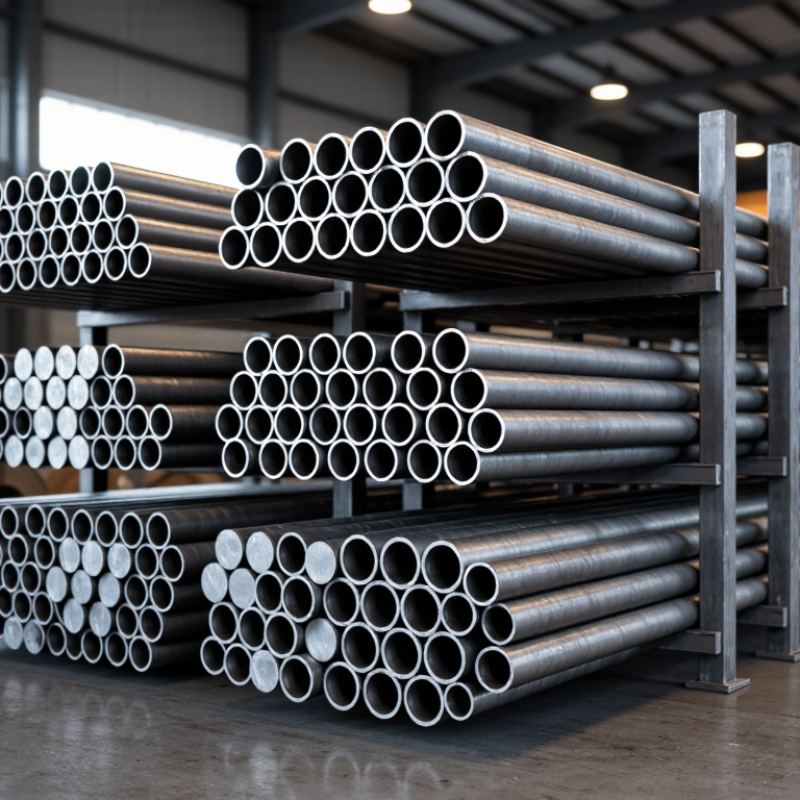
ERW steel pipe is made by forming flat steel strip into a tube and electrically welding its meeting edges. The resulting longitudinal seam runs along the pipe, rather than around it. That geometry affects inspection, pressure suitability, and how the pipe performs under bending or repeated loads. The seam is not a defect by itself. Its quality depends on controlled forming, welding, heat treatment where specified, and inspection.
The World Steel Association’s World Steel in Figures 2025 reports global crude steel production of 1,882.6 million tonnes in 2024. That figure shows the scale of steel supply, not the performance of any particular ERW pipe.
Buyers still need to match grade, dimensions, and testing requirements to the application. For line-pipe service, API 5L specifies product requirements; ASTM A53 covers pipe for specified general uses. Neither standard makes every ERW product suitable for every duty.
Look closely at the seam and its inspection records. Ask whether the pipe has been tested to the required specification, and confirm wall thickness and tolerance on the mill documentation. ERW can suit many structural, water, and lower-pressure applications when the product specification permits it. For demanding service, design conditions matter more than the “ERW” label alone. No shortcut here. A neat weld bead is reassuring, but it cannot replace documented testing or a careful review of operating pressure, temperature, and cyclic loads.
What Is the Best ERW Steel Pipe for Buyers in 2026?
Standards at a Glance: ASTM A53 Type E Versus API 5L
For buyers, the key distinction is the specification’s purpose. ASTM A53 Type E identifies electric-resistance-welded pipe under a general-purpose pipe standard. API 5L covers line pipe for pipeline service and can include ERW manufacturing. In other words, these labels are not direct substitutes: one names a pipe type within a standard, while the other sets requirements for line pipe.
ASTM A53 includes Grades A and B, with requirements for dimensions, mechanical properties, and testing. API 5L uses grades and Product Specification Levels, PSL 1 and PSL 2. PSL 2 adds requirements for matters such as chemical composition, testing, and traceability. Details matter. Buyers should check the ordered grade, size, wall thickness, process, and inspection documents—not just “ERW” on a quotation. A familiar specification can still be the wrong fit.
The U.S. Energy Information Administration describes a natural-gas pipeline network spanning roughly three million miles, including gathering, transmission, and distribution lines. That scale shows why service conditions matter, but it does not make every pipe suitable for every line. For a pipeline project, API 5L may be the clearer starting point; for general pressure or mechanical service, ASTM A53 Type E may be appropriate. Confirm the project specification and operating conditions. The cheapest match can be wrong, and standards alone do not settle every engineering question.
| Comparison Dimension | ASTM A53 Type E | API 5L ERW Pipe |
|---|---|---|
| Primary application | General-purpose pipe for pressure, mechanical, and other permitted service applications, subject to the applicable design code and project requirements. | Line pipe intended primarily for pipeline transportation systems, with requirements selected according to the pipeline service and project specification. |
| Product standard | ASTM A53/A53M, covering black and hot-dipped, zinc-coated welded and seamless steel pipe. | API Specification 5L, covering line pipe for pipeline transportation systems. |
| ERW designation | Type E identifies electric-resistance-welded pipe. ASTM A53 also includes Type F (furnace-butt-welded) and Type S (seamless). | ERW describes a manufacturing route; the applicable product requirements are specified under API 5L and the selected product specification level. |
| Grades and levels | Common grades include Grade A and Grade B. Grade selection must match the specified strength and service requirements. | Includes Grade B and higher-strength grade designations such as X42 and X52. PSL 1 and PSL 2 define different levels of requirements; the specified grade and PSL matter. |
| Typical buyer focus | Often considered for building services, water, air, and other general piping applications where the governing code accepts the material. | Often selected for pipeline projects where line-pipe requirements, grade, PSL, and project-specific pipeline specifications apply. |
| Testing and inspection | Requirements include specified mechanical tests and pressure or electric testing provisions for welded pipe, as applicable to the standard and order. | Testing and inspection requirements depend on the selected grade and PSL. The standard includes requirements for testing and inspection, including weld-related examination provisions as applicable. |
| Coating and surface condition | May be supplied black or hot-dipped zinc-coated, as specified. Additional coatings are subject to the purchase specification. | Coating and corrosion-protection requirements are generally defined by the project or purchase specification in addition to the selected API 5L requirements. |
| Pressure suitability | Not determined by the standard name alone. Allowable pressure depends on dimensions, material properties, temperature, design code, and service conditions. | Not determined by the grade alone. Pipeline design, wall thickness, operating conditions, design factors, and applicable regulations must be evaluated. |
| Key purchasing checks | Confirm the ASTM A53 edition, Type E, grade, size, wall thickness, end finish, coating, testing, and any supplementary requirements. | Confirm the API 5L edition, grade, PSL, dimensions, wall thickness, delivery condition, inspection, testing, and project-specific requirements. |
| When it may be the better fit | A practical candidate when the project specifies ASTM A53 and the pipe’s grade, dimensions, and permitted service meet the applicable code. | A practical candidate when the project specifies line pipe and requires the grade, PSL, and pipeline-related requirements set out in the project documents. |
Buyer note: There is no universally “best” ERW pipe between these standards. Confirm the governing code, current standard edition, service conditions, grade, PSL (where applicable), dimensions, testing, and certification requirements before ordering.
Size and Strength Benchmarks: NPS 1/8–26 and X52 at 359 MPa
For buyers, “best” depends on fit, pressure needs, and documented quality. The NPS 1/8–26 range spans small-bore tubing-like applications to large-diameter lines, but not every mill produces every size. Confirm outside diameter, wall thickness, length, end finish, and applicable specification before comparing prices. A mismatch can cause delays at fabrication, even when the quoted grade looks right.
X52 refers to a strength grade with a minimum yield strength of 359 MPa. That figure is a useful benchmark, not a complete design check. Verify the required standard, chemical and mechanical test results, weld inspection records, and traceability documents. Also check whether the project needs supplementary testing. Details can vary by order, and a tidy certificate alone does not answer every question.
Tips: Ask for the exact size-and-wall schedule, not just “NPS 10.” Compare the stated 359 MPa minimum with the mill test report, and clarify tolerances before shipment. Small paperwork gaps matter. Buyers can overlook them.
For buyers comparing ERW steel pipe in 2026, quality starts with traceable evidence, not a polished certificate alone. The World Steel Association reported 1.88 billion tonnes of crude steel production in 2024 (World Steel in Figures 2025), a reminder of the scale of supply chains behind steel products. Ask for pipe-specific inspection records linked to heat and lot numbers. Check weld seams visually and review the specified nondestructive examination, such as ultrasonic testing. API Specification 5L and ISO 3183:2019 set requirements that vary by product level and order conditions, so confirm the applicable edition and acceptance criteria. Details matter.
Hydrostatic records should identify test pressure, hold time, equipment calibration, and results for each required test lot. A pass is useful; an unexplained missing record is not. Compare outside diameter, wall thickness, length, and straightness against the purchase specification and applicable tolerances. Request actual measurements, not just a statement of compliance. Keep a few sample readings for independent verification. No checklist catches everything, and paperwork can still be incomplete. That is worth acknowledging. A buyer who checks weld evidence, pressure-test records, and dimensional data together can spot gaps before pipe reaches fabrication.
Buyer Selection: Match Grade, Wall Schedule, and Corrosion Protection to Service
The best ERW pipe is the one specified for its actual service, not simply the heaviest option. Match the steel grade to operating pressure, temperature, and required toughness. Confirm the governing project specification and applicable design code before comparing quotations. A grade name alone does not prove suitability. Review mill test certificates and verify that heat numbers trace to the delivered pipe.
Wall thickness matters just as much. Select the required schedule or calculated wall based on design conditions, tolerances, and any corrosion allowance. More steel adds weight and cost, but may not solve a coating or installation problem. Check outside diameter and wall measurements against the purchase specification. Small differences matter at a tight fit-up. They can slow a crew down.
Protection should reflect the exposure. Buried pipe may need an external coating suited to soil conditions; wet internal service may call for a compatible lining. Specify surface preparation, coating thickness, and inspection criteria, including checks for holidays or damage near pipe ends. Handling can undo good factory work. I have seen tidy specifications overlook storage and field repairs. That gap deserves attention, especially where moisture sits at joints.