Top 10 Benefits of Using Cold Rolled Coils in Industry?
Cold Rolled Coils offer numerous advantages in various industries. These materials are known for their precision and smooth surface finish. Manufacturers appreciate their ability to provide consistent thickness and shape. This reliability leads to significant cost savings.
Using Cold Rolled Coils can enhance the strength of products. They are often used in automotive, construction, and appliance sectors. The reduced material waste is another key benefit. Factories can operate more efficiently due to fewer defects.
Consider the versatility of Cold Rolled Coils. They can be easily processed into different shapes and sizes. This flexibility may seem beneficial, but it can also lead to over-reliance on a single material type. Businesses need to evaluate their specific needs carefully.
Benefits of Cold Rolled Coils: An Overview for Industrial Applications
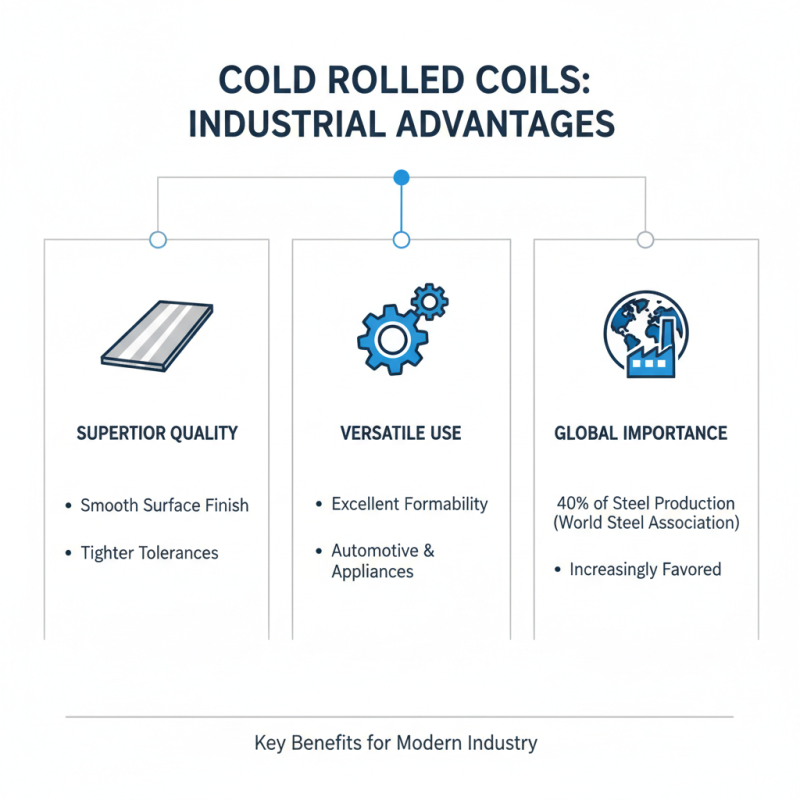
Cold rolled coils are increasingly favored in industrial applications due to their distinct advantages. These materials are known for their superior surface finish and tighter tolerances. According to a report from the World Steel Association, cold rolled steel accounts for approximately 40% of total steel production. This material offers excellent formability, which is crucial for industries ranging from automotive to appliances.
One notable benefit is the enhanced strength of cold rolled coils. The cold working process increases yield strength compared to hot rolled products. Industry studies indicate that cold rolled steel can achieve up to 10% greater mechanical strength. This quality allows for thinner materials without compromising structural integrity, saving both weight and cost.
Tips: When considering cold rolled coils, assess your specific application needs. Not every project requires high strength; evaluate the material’s performance in your design. Also, keep in mind that these coils can be more susceptible to corrosion. Proper treatment and coatings can help mitigate this issue, extending the material's lifespan. Always review supplier specifications to ensure you select the right product for your application.
Enhanced Surface Finish: Improving Aesthetic and Functional Properties
Cold rolled coils are essential in various industries. They offer an enhanced surface finish that significantly improves both aesthetic and functional properties. The process of cold rolling results in a smooth, shiny surface that is not only pleasing to the eye but also beneficial for further processing. This smooth finish allows for better adhesion of paints and coatings, leading to superior final products.
The aesthetic appeal of cold rolled coils can transform the overall look of finished goods. Smooth surfaces reflect light beautifully, providing a polished finish. However, it's important to consider the potential downsides. While the improved finish can add value, it also requires careful handling. Scratches and dents can easily mar the surface. Thus, extra precautions are necessary during storage and transportation.
Functionally, the enhanced surface finish often leads to better performance in applications. It can provide superior weldability and increased corrosion resistance. Despite these benefits, manufacturers must be cautious. Over-reliance on surface aesthetics might overshadow other important characteristics, like strength and durability. Finding a balance between appearance and functionality is crucial for optimal results.
Top 10 Benefits of Using Cold Rolled Coils in Industry
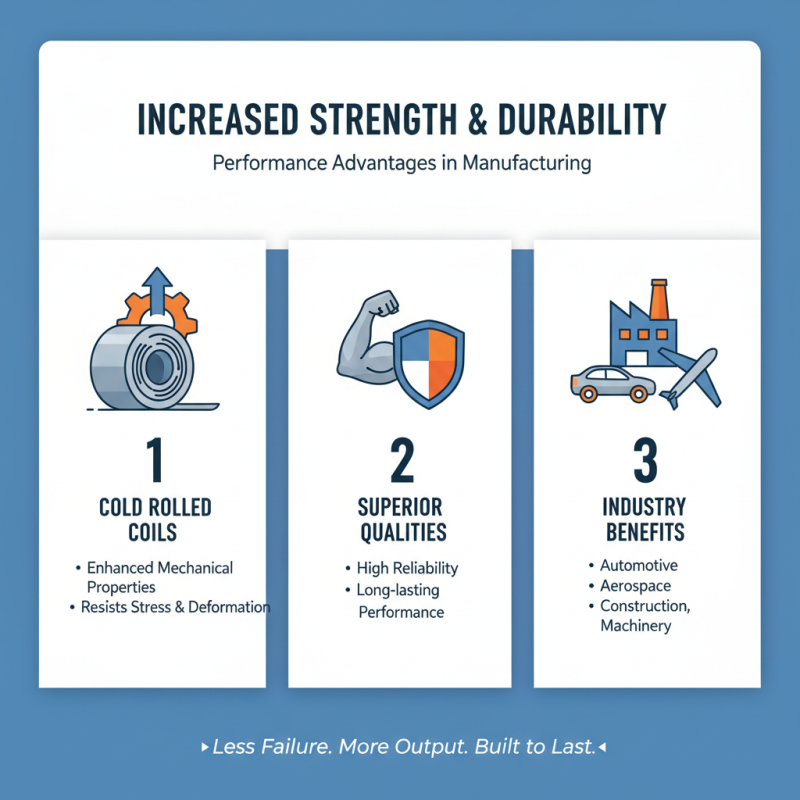
Increased Strength and Durability: Performance Advantages in Manufacturing
Cold rolled coils have gained prominence in various industries due to their impressive strength and durability. This manufacturing method enhances the mechanical properties of steel. The result is a product that withstands stress and is less prone to deformation. Such qualities are particularly beneficial in industries that demand high reliability and performance.
The production process of cold rolled coils involves shaping at room temperature. This leads to increased hardness and higher tensile strength compared to hot rolled alternatives. In practical terms, manufacturers can rely on these coils for critical components, such as beams and frames. However, the initial cost may be higher, which can be a concern. Balancing the benefits against the investment can be challenging for some businesses.
Moreover, the improved surface finish of cold rolled coils can lead to better aesthetic qualities. This is important for consumer-facing industries where appearance matters. Nevertheless, it can also mean extra processing time to achieve desired finishes. In some cases, businesses might find themselves weighing the pros and cons of additional treatments. Overall, the choice comes down to specific requirements and long-term goals.
Cost Efficiency: How Cold Rolled Coils Save Money in Production
Cold rolled coils (CRC) are known for their cost efficiency in various industrial applications. Recent industry reports indicate that using CRC can reduce production costs by 15-20%. This significant savings comes from the precision manufacturing techniques that reduce material waste and minimize the need for extensive finishing processes. Manufacturers are often surprised by how such savings can enhance their profit margins.
In addition to material savings, CRC offers improved durability at a lower cost. Reports from metalworking associations suggest that the tensile strength of cold rolled steel can be up to 20% higher than hot rolled steel. This higher strength allows for thinner materials without sacrificing performance, further cutting costs. Some plants, however, struggle with the initial setup costs for CRC processes. They may overlook the long-term benefits. This creates a need for careful evaluation of production methods and materials.
Some industries still rely on traditional methods due to inertia or resistance to change. These industries could benefit significantly from switching to CRC. This shift could lead to reduced energy consumption and better material efficiency. The advantages of cold rolled coils are clear, yet not all manufacturers have embraced this shift. Those still hesitant should reflect on potential gains versus their current practices.
Versatility in Applications: Industries Benefiting from Cold Rolled Coils
Cold rolled coils are increasingly vital across various industries. Their unique mechanical properties make them perfect for applications such as automotive, appliances, and construction. For instance, the automotive sector alone is projected to consume around 7 million tons of cold rolled steel annually by 2025. This highlights the significant demand created by manufacturers striving for high-strength yet lightweight materials.
In the appliances industry, cold rolled coils offer excellent surface finish and dimensional precision. Reports indicate that about 60% of home appliances utilize cold rolled steel. These materials contribute to both aesthetic appeal and functionality. However, the process of cold rolling can sometimes create surface defects. This complicates production and might lead to increased costs for companies.
The construction industry also benefits from cold rolled coils. These materials provide durability while allowing for complex shapes and easy fabrication. Yet, there have been instances where improper handling resulted in warping and deformation. Such issues prompt manufacturers to reconsider their processes and improve quality control measures. Overall, while cold rolled coils deliver substantial advantages, the challenges they present require constant evaluation and refinements.
Top 10 Benefits of Using Cold Rolled Coils in Industry
| Benefit |
Description |
Industries Benefiting |
| High Dimensional Accuracy |
Cold rolled coils offer tight tolerances and superior flatness. |
Automotive, Aerospace |
| Enhanced Strength |
Cold rolling increases the tensile strength of the material. |
Construction, Manufacturing |
| Improved Surface Finish |
Provides a smooth and visually appealing surface. |
Electronics, Appliances |
| Versatility |
Can be used in a wide range of applications across different industries. |
Various sectors |
| Cost-Effectiveness |
Provides good value with high quality at lower prices. |
Manufacturing, Retail |
| Excellent Formability |
Can be easily shaped and formed for various applications. |
Automotive, Fabrication |
| Lightweight |
Helps to reduce weight in applications where every gram matters. |
Aerospace, Automotive |
| Better Paint Adhesion |
Surface characteristics help improve paint and coating finishes. |
Consumer Goods, Automotive |
| High Tensile Strength |
Stronger material allows better performance in demanding applications. |
Construction, Heavy Machinery |
| Environmental Sustainability |
Often made from recycled materials, promoting green manufacturing. |
Various sectors |