Top 10 Benefits of Hot Rolled Steel Sheet for Construction?
The construction industry increasingly relies on materials that enhance efficiency and durability. One such material is the Hot Rolled Steel Sheet. According to a report by the World Steel Association, steel production reached 1.8 billion tons in 2021, highlighting its significance in construction. Hot Rolled Steel Sheets, known for their strength and adaptability, play a critical role in various applications, from structural support to aesthetic finishes.
These sheets offer a favorable combination of properties that can optimize construction projects. Their versatility allows for easy fabrication, depth of design, and reduced overall construction time. The global construction market is expected to grow by 7.5% annually. This growth will further depend on efficient materials like Hot Rolled Steel Sheet. However, despite their many benefits, some challenges remain.
While they are cost-effective, inconsistent quality can be a concern. Ensuring uniform thickness and strength is critical for structural applications. Attention to sourcing and quality control can mitigate these potential drawbacks. A reflective approach towards quality assurance can enhance the reliability of Hot Rolled Steel Sheets in construction projects. Emphasizing these aspects is essential for maximizing benefits while minimizing risks.

Benefits of Hot Rolled Steel Sheet in Structural Integrity and Durability
Hot rolled steel sheets are essential in modern construction. They provide significant structural integrity and durability, making them a preferred choice for builders. According to a report from the American Iron and Steel Institute (AISI), hot rolled steel has a unique combination of strength and malleability. This allows it to withstand heavy loads without cracking, which is crucial for buildings and bridges.
One key benefit of hot rolled steel is its ability to resist deformation over time. Research indicates that hot rolled steel maintains its shape better than other materials, particularly under stress. This structural reliability is vital in regions prone to earthquakes. Engineers often consider these properties when designing structures. However, the inherent differences in metallurgical properties can lead to variances in performance and quality.
**Tip:** When selecting hot rolled steel, always consult recent industry reports for updated specifications.
Additionally, hot rolled steel sheets are often more affordable than their cold rolled counterparts. However, they can have a rough surface finish, which might not always be desirable or sufficient for aesthetic applications. Some construction projects may require additional processing to improve surface quality. But, durability often outweighs these considerations in critical structures.
**Tip:** Evaluate your project's priorities. Sometimes, minor imperfections can lead to substantial savings.
Top 10 Benefits of Hot Rolled Steel Sheet for Construction
This chart illustrates the top ten benefits of using hot rolled steel sheets in construction, ranking their importance on a scale from 1 to 10. These benefits highlight the advantages in structural integrity, durability, and other critical factors that contribute to effective construction practices.
Cost-Effectiveness of Hot Rolled Steel Sheets for Construction Projects
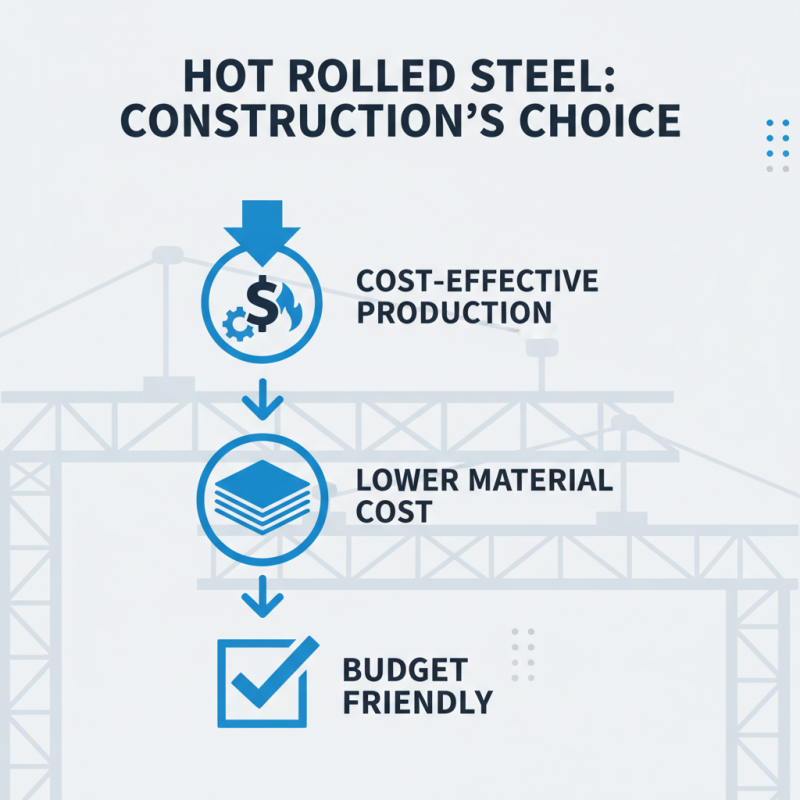
Hot rolled steel sheets are a popular choice in construction. Their cost-effectiveness is a significant advantage. These sheets are generally cheaper than other types of steel due to the manufacturing process. They are produced at high temperatures, allowing for less energy usage and waste. This method also reduces production costs, benefiting construction budgets.
Using hot rolled steel sheets can lead to savings in various ways. Projects using these sheets often require less processing, reducing labor costs. The sheets' flexibility allows for easier fabrication, which speeds up the construction timeline. This efficiency can lead to reduced project overheads. However, there are some challenges to consider. The surface finish may not be as refined, requiring additional treatment for certain applications.
Moreover, while these materials offer many benefits, their strength can vary. Depending on the quality control during production, some sheets may have inconsistencies. Therefore, careful selection is crucial. It’s essential to assess the specific needs of a project to avoid potential issues. Project managers should weigh the pros and cons of using hot rolled steel sheets. These considerations play a vital role in ensuring a successful construction project.
Versatility of Hot Rolled Steel Sheets in Various Construction Applications
Hot rolled steel sheets offer remarkable versatility in construction. These sheets are used in a variety of applications. They are ideal for structural components, like beams and columns. Their strength allows for impressive load-bearing capabilities. Additionally, hot rolled sheets can be easily shaped and fabricated. This adaptability makes them a favorite in diverse construction projects.
In residential buildings, hot rolled steel sheets can be utilized for framing and support. They provide both durability and stability. However, some may worry about rust and weathering. Proper treatment and coating can mitigate these concerns. For industrial constructions, these sheets can be cut to size for cladding and roofing. This practical application showcases their functional benefits in larger projects.
Despite their many advantages, hot rolled steel sheets are not without drawbacks. The surface finish may not always be aesthetically pleasing. This could require additional finishing work. Furthermore, their weight can pose challenges in handling and transportation. It’s essential for builders to consider these aspects. This reflection can lead to more informed decisions when selecting materials for construction.
Top 10 Benefits of Hot Rolled Steel Sheet for Construction
| Benefit |
Description |
Applications |
| Cost-Effectiveness |
Hot rolled steel sheets are typically cheaper to produce than cold rolled sheets, leading to lower material costs. |
General construction, manufacturing |
| High Strength |
These sheets provide excellent structural strength, making them ideal for load-bearing applications. |
Frameworks, bridges |
| Versatility |
Can be used in numerous applications due to their formability and flexibility. |
Automotive parts, machinery |
| Ease of Fabrication |
They can be easily welded, bolted, or machined to fit specific designs. |
Custom structures, DIY projects |
| Excellent Ductility |
Hot rolled sheets have a high level of ductility, allowing them to be stretched and shaped without breaking. |
Metal roofing, panels |
| Minimal Residual Stress |
The hot rolling process reduces internal stresses in the material, enhancing performance. |
Structural applications |
| Availability |
Widely available in different dimensions and grades, making sourcing easier. |
Construction, bulk orders |
| Adaptability to Various Processes |
Can be processed further through cutting, bending, or galvanizing. |
Manufacturing, fabrication |
| Sustainability |
Made from recycled materials, reducing environmental impact. |
Green construction initiatives |
| Impact Resistance |
They can withstand significant impact loads without deforming. |
Heavy machinery, trucks |
Enhanced Fabrication and Welding Properties of Hot Rolled Steel Sheets
Hot rolled steel sheets are essential in the construction industry. They offer enhanced fabrication and welding properties, making them highly desirable. This type of steel is typically softer compared to cold rolled steel. This characteristic allows for easier shaping and bending. When architects or builders need precision, hot rolled sheets provide flexibility. They form great structural elements.
Welding hot rolled steel requires less preheating. This ability saves time and effort. Many projects benefit from quicker assembly. The surface of hot rolled steel is usually rough. This roughness can complicate some processes. It may require extra finishing work for aesthetic purposes. However, this can be seen as a design challenge rather than a limitation.
Hot rolled steel sheets also retain strong mechanical properties. They exhibit good strength and toughness. These traits are crucial when creating buildings or bridges. Engineers often appreciate these aspects. Nevertheless, fabricators must be cautious. Poor welding techniques can lead to weaknesses. Continuous learning and skill improvement are vital for successful projects.
Sustainability Aspects of Using Hot Rolled Steel Sheets in Construction
Hot rolled steel sheets are increasingly recognized for their sustainability benefits in the construction sector. They are produced with great efficiency, consuming less energy than other methods. This energy reduction often translates to lower greenhouse gas emissions.
Using recycled materials in their production further enhances their eco-friendliness. Steel is highly recyclable, and this characteristic can contribute to a circular economy in construction.
The longevity of hot rolled steel sheets is another important sustainability aspect. These materials resist wear and tear, often leading to fewer replacements over time. However, designers must consider how the choice of steel impacts overall project sustainability. For example, while steel is durable, its extraction and processing can be resource-intensive. Balancing these factors is crucial.
Adopting hot rolled steel sheets encourages innovative building practices. But it’s essential for architects and engineers to grapple with their environmental footprint. The construction industry has a long way to go in minimizing impact. Each project should reflect on material choices and their long-term consequences. Embracing hot rolled steel sheets can be a step forward, but we must question if we are doing enough to ensure a sustainable future.