Leave Your Message

2026 Top Galvanized Steel Sheet Types to Buy

Choosing the right Galvanized Steel Sheet in 2026 requires more than comparing prices. Coating weight, steel grade, surface finish, forming needs, and delivery quality all affect the final result. A bright sheet may look attractive, yet appearance alone cannot prove corrosion resistance. Buyers should examine mill certificates, coating designations, thickness tolerances, and test records before placing an order.

This guide reviews practical sheet types for construction, fabrication, roofing, automotive parts, ductwork, and general manufacturing. Hot-dip galvanized sheets remain a strong choice for outdoor structures because their zinc coating provides durable protection. Electro-galvanized sheets offer a smoother surface and tighter thickness control, which can benefit painted interior components. Galvannealed sheets support welding and painting, while different spangle finishes influence appearance rather than basic performance. Small distinctions matter.

Real projects often reveal the gaps in product descriptions. A roofing contractor may need stronger forming performance, while a cabinet manufacturer may prioritize a clean, uniform surface. In coastal areas, coating thickness and edge protection deserve extra attention. A lower purchase price can become expensive after early rust, poor bending, or rejected parts. I would not treat one type as universally best. Even experienced buyers can overlook storage conditions, cut-edge exposure, or compatibility with fasteners. The recommendations ahead combine recognized standards, supplier documentation, and practical selection experience. Still, every specification should be checked against the project environment, production method, and expected service life. That final review is essential.

2026 Top Galvanized Steel Sheet Types to Buy

What Galvanized Steel Sheets Are and How Zinc Coating Protects Them

2026 Top Galvanized Steel Sheet Types to Buy

Galvanized steel sheets combine a steel core with a protective zinc coating. The zinc creates a physical barrier against moisture, oxygen, and road salts. More importantly, zinc provides sacrificial protection. It corrodes before exposed steel does. This action helps protect scratches and cut edges, although protection is not unlimited. Hot-dip galvanized sheets usually have a thicker, tougher coating for roofing, outdoor structures, and industrial panels. Electro-galvanized sheets have a smoother surface and more consistent appearance, making them useful for indoor parts and precision fabrication.

Coating weight matters. A heavier zinc layer generally supports longer outdoor service, but environment and forming methods also influence performance. Check the coating designation, sheet thickness, surface finish, and intended exposure before buying. From practical inspection, poorly stored sheets often develop white rust beneath tight packaging. Keep them dry, ventilated, and slightly separated. Small details matter. I have also seen buyers focus only on zinc weight and overlook bending requirements. That choice can cause cracking, waste, and rework.

Tips: Confirm the steel grade and coating standard on the test certificate. Inspect edges, corners, and surface uniformity under good light. For coastal or chemical environments, request suitable corrosion data instead of guessing. Do not assume a shiny surface means better protection. That assumption deserves reconsideration. Buy extra material for cutting trials when forming behavior is uncertain.

Main Galvanized Steel Sheet Types Available in 2026

In 2026, galvanized steel sheet buyers can choose from several coating systems. The right option depends on exposure, forming, welding, and painting requirements. Hot-dip galvanized (HDG) sheet remains a practical choice for roofing, ductwork, structural frames, and outdoor panels. Its zinc coating provides sacrificial protection when small scratches expose the steel. Electrogalvanized sheet has a thinner, smoother coating and supports precise forming and attractive painted finishes. Less coating means less reserve.

Galvannealed sheet combines zinc with iron through controlled heating. Its duller surface improves paint adhesion, making it useful for automotive panels and fabricated enclosures. Zinc-aluminum-magnesium sheet offers another growing option, especially where cut-edge protection matters. Galvalume-type sheet uses an aluminum-zinc coating, but it is not conventional galvanized steel. The distinction matters during specification. The International Zinc Association reports that galvanizing consumes about 60% of global zinc use. The USGS Mineral Commodity Summaries 2025 reported roughly 12 million metric tons of global zinc mine production in 2024.

Buyers should request coating mass, steel grade, yield strength, and test certificates. ASTM A653 and EN 10346 provide useful specification frameworks. For coastal or industrial exposure, coating selection deserves more attention than surface brightness. A clean appearance can mislead. Forming cracks, trapped moisture, and poor edge treatment may shorten service life. I would compare lifecycle performance, not only the lowest purchase price. Supplier data still needs checking against the actual installation environment.

How to Compare Coating Grades, Thicknesses, and Surface Finishes

2026 Top Galvanized Steel Sheet Types to Buy

Choosing galvanized sheet starts with the coating grade, not the lowest invoice price. ASTM A653 G30, G60, and G90 specify total coating mass on both sides. G90 equals about 275 g/m², while G60 equals approximately 183 g/m². One side may still have less coating than expected. Check the mill certificate carefully.

For exposed roofs, panels, and outdoor enclosures, heavier coatings usually provide better corrosion protection. However, forming can damage the coating at tight bends. EN 10346 uses designations such as Z100 and Z275, also measured in g/m². The numbers are not directly interchangeable with every ASTM grade. Confirm the standard before comparing offers.

Thickness affects stiffness, weight, and forming behavior. A 1.2 mm sheet feels substantially firmer than a 0.7 mm sheet, but tolerance matters. The World Steel Association reported 1,888.2 million tonnes of crude steel production in 2023. That scale does not guarantee consistent sheet quality. Ask for thickness tolerances, coating test results, and bend requirements.

Surface finish deserves equal attention. Regular spangle creates visible crystal patterns, while minimized or zero-spangle surfaces look more uniform. For painted parts, surface cleanliness and roughness often matter more than appearance. ASTM A653 allows different surface conditions, so “galvanized” alone is incomplete.

I would not choose G90 automatically. It may add cost without improving a sheltered indoor application. Conversely, thin coatings can fail quickly near salt spray, cut edges, and trapped moisture. Compare the environment, coating mass, base thickness, finish, and forming process together. My earlier mistake was treating coating weight as the whole decision. It is only one piece.

Best Galvanized Steel Sheets for Roofing, Construction, and Manufacturing

2026 Top Galvanized Steel Sheet Types to Buy

For roofing, hot-dip galvanized sheet remains the practical choice. Its zinc coating protects cut edges and exposed surfaces from moisture. Choose structural-grade sheet for roof decks and load-bearing panels. Lighter commercial-grade sheet suits flashing, gutters, and trim. ASTM A653/A653M and EN 10346 provide useful coating and strength references. The World Steel Association reported global crude steel production of about 1.89 billion tonnes in 2023. That scale supports broad availability, but quality still varies between mills.

Construction projects need more than a shiny surface. Specify coating mass, yield strength, thickness tolerance, and bend performance. Z275 coating, equal to roughly 275 g/m² total zinc, is common for demanding exterior work. Batch-galvanized components should follow ISO 1461 when fabricated parts need protection. Check drilled holes and welded zones carefully. They often fail earlier.

Manufacturing requires a different balance. Electro-galvanized sheet offers a smoother finish for appliances, panels, and precision parts. It usually provides less outdoor protection than hot-dip material. For humid factories, thicker zinc is safer. USGS Mineral Commodity Summaries 2024 estimated global zinc mine production near 12 million metric tons in 2023. Zinc is valuable, not limitless. A thicker coating is not automatically better; it can complicate forming and welding. I still see buyers choose by appearance alone. That is an expensive shortcut.

How to Select, Buy, and Maintain Galvanized Steel Sheets Wisely

2026 Top Galvanized Steel Sheet Types to Buy

Selecting galvanized steel sheets wisely starts with the working environment. Choose hot-dip galvanized sheets for outdoor structures, roofing, and equipment exposed to moisture. Electro-galvanized sheets offer a smoother surface and tighter thickness control for indoor fabrication and painted parts. Ask for the zinc coating mass, sheet thickness, yield strength, and surface finish before comparing prices.

Details matter.

For coastal or industrial areas, select a heavier zinc coating and confirm whether additional painting is required. Regular spangle, minimized spangle, and zero-spangle surfaces suit different appearance and forming needs. Check the mill certificate, inspection records, packaging condition, and production date. Edges should be clean, without deep cracks, excessive rust, or white corrosion. A low price can hide weak coating protection or inconsistent dimensions.

Storage affects service life. Keep sheets indoors, dry, and slightly tilted for drainage. Separate bundles from concrete floors with timber supports. Do not wrap damp sheets tightly; trapped water can create white rust. During installation, remove metal dust and repair damaged coating with a compatible zinc-rich product. Inspect exposed areas after heavy rain, salt exposure, or cutting work.

Small mistakes are common.

In practical inspections, buyers often measure thickness but ignore coating uniformity. That choice can cause early corrosion near cut edges. I have also seen carefully coated sheets stored under leaking roofs. Good specifications cannot repair poor handling. Keep purchase records, photographs, and inspection results for future maintenance decisions.

2026 Top Galvanized Steel Sheet Types to Buy - How to Select, Buy, and Maintain Galvanized Steel Sheets Wisely

Sheet Type How It Is Made Typical Zinc or Metallic Coating Key Advantages Suitable Applications Main Limitations What to Specify When Buying Maintenance Guidance
Hot-Dip Galvanized Steel Sheet
(HDG)
Steel sheet passes through a molten zinc bath, creating a metallurgically bonded zinc coating. Common ASTM A653/A653M coating designations include:
  • G30: approximately 90 g/m² total coating mass
  • G60: approximately 180 g/m²
  • G90: approximately 275 g/m²
  • G165: approximately 550 g/m²
  • Strong general-purpose corrosion protection
  • Good formability when the correct steel grade is selected
  • Widely available in construction and fabrication markets
Roofing and wall panels, ductwork, HVAC components, structural parts, automotive components, enclosures, and general fabrication. Freshly galvanized surfaces can show spangle or appearance variation. Severe forming may damage the coating if the sheet grade and tooling are unsuitable. Confirm steel grade, nominal thickness, coating designation, surface finish, passivation or oiling requirements, sheet dimensions, flatness, and applicable standard. Inspect cut edges, scratches, fastener areas, and water-trap locations. Remove dirt and salts with a mild cleaner and clean water; repair exposed steel with a suitable zinc-rich coating where permitted.
Electro-Galvanized Steel Sheet
(EG)
Zinc is deposited electrolytically onto cold-rolled steel, producing a highly uniform and smooth surface. Usually selected by zinc coating thickness or mass according to the applicable product standard. Coatings are commonly thinner than heavy-duty hot-dip coatings.
  • Excellent surface smoothness and dimensional consistency
  • Good paint and forming performance
  • Suitable where appearance and tight tolerances matter
Interior automotive parts, appliance panels, electrical cabinets, precision formed parts, office equipment, and painted indoor components. Generally offers less sacrificial zinc protection than heavy hot-dip coatings in continuously wet or highly corrosive outdoor environments. Specify coating mass or thickness on each side, surface quality, paintability, temper, oiling, corrosion-protection packaging, and the required dimensional tolerances. Keep dry during storage, prevent condensation, and avoid contact with standing water. Clean fingerprints, salts, and cutting fluids promptly before painting or assembly.
Galvannealed Steel Sheet
(GA)
Hot-dip galvanized sheet is heat-treated after coating so that iron diffuses into the zinc layer, forming an iron-zinc alloy coating. Often specified under ASTM A653/A653M with galvannealed coating designations such as A40, A60, or other project-required classes.
  • Very good paint adhesion
  • Consistent surface for automotive and industrial painting
  • Good spot-welding behavior compared with some heavily coated products
Painted vehicle panels, doors, cabinets, appliance parts, and fabricated components requiring a durable paint system. The alloy coating can be more brittle than a conventional zinc coating during severe forming. Bare GA surfaces may appear dull and powdery rather than bright. Specify the galvannealed coating class, steel grade, forming requirement, surface quality, phosphating or pretreatment compatibility, and paint system. Protect the surface from prolonged moisture before painting. Remove loose residue without aggressive abrasion and follow the coating supplier's pretreatment instructions.
Galfan-Coated Steel Sheet Steel is coated with an aluminum-zinc alloy containing approximately 5% aluminum and small additions of other elements, depending on the standard. Common coating designations may include AZM values under relevant standards; the exact designation must be stated on the purchase order.
  • Improved corrosion performance in many atmospheric environments
  • Good formability compared with some higher-aluminum coatings
  • Useful for roofing, agricultural, and industrial products
Roofing and cladding, agricultural buildings, structural profiles, ventilation parts, and outdoor fabricated products. It is not the same product as conventional zinc-galvanized sheet. Compatibility with other metals, sealants, paints, and welding processes must be checked. Confirm the alloy coating designation, total coating mass, substrate grade, surface treatment, intended forming method, and compatibility with the joining process. Keep surfaces clean and well drained. Prevent crevices and trapped moisture, especially where the sheet contacts dissimilar metals or porous materials.
Aluminum-Zinc Alloy-Coated Steel Sheet
(Often Called Galvalume-Type Sheet)
Steel is coated with an aluminum-zinc alloy, commonly around 55% aluminum, with the balance primarily zinc and a small amount of silicon; the exact composition depends on the governing standard. Commonly specified using AZ coating designations, such as AZ50 or AZ55, under the applicable standard.
  • Strong resistance to atmospheric corrosion in many applications
  • Good heat reflectivity
  • Often used for long-life roofing and cladding systems
Roofing, wall cladding, agricultural buildings, industrial buildings, heat-resistant panels, and exposed architectural applications. It is an aluminum-zinc coating, not a conventional pure-zinc galvanized coating. Cut edges and severe forming areas may require additional design attention. Specify AZ coating class, substrate grade, paint or resin coating, profile, minimum thickness, intended environment, and fastener compatibility. Keep drainage paths open, remove leaves and debris, and avoid prolonged contact with wet concrete, treated wood, copper, or incompatible metals.
Prepainted Galvanized Steel Sheet A galvanized or zinc-alloy-coated steel substrate receives a factory-applied primer and topcoat under controlled production conditions. Coating requirements include both the metallic coating class and the organic paint system. Paint thickness varies by product and service environment.
  • Ready-to-use colored surface
  • Consistent appearance and factory-controlled coating quality
  • Reduced need for field painting
Roof and wall panels, doors, partitions, equipment housings, ceiling systems, and architectural components. Scratches, cut edges, and field-drilled holes can expose the underlying metal. Color and gloss may change with ultraviolet exposure and weathering. Specify metallic coating class, paint chemistry, nominal paint thickness, color tolerance, gloss, warranty conditions, forming radius, protective film, and storage requirements. Wash with clean water and a mild, non-abrasive detergent when needed. Avoid strong solvents, abrasive pads, and storing wet sheets tightly packed.
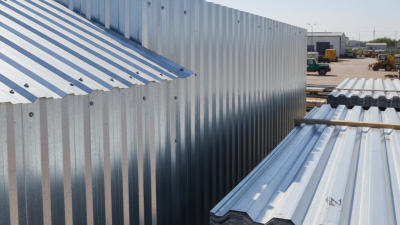
Corrugated or Profiled Galvanized Sheet Flat coated sheet is roll-formed into corrugated, trapezoidal, or other structural profiles. Typical metallic coating choices include G60, G90, AZ50, AZ55, or project-specific equivalents, depending on the coating system and standard.
  • Higher stiffness than flat sheet at similar material thickness
  • Efficient water shedding when correctly installed
  • Available in bare or prepainted finishes
Roofing, wall cladding, fencing, agricultural structures, temporary buildings, and lightweight enclosures. Performance depends heavily on laps, fasteners, slope, drainage, cut-edge treatment, and installation quality. Specify profile geometry, effective cover width, sheet length, substrate thickness, coating class, paint system, fastener type, lap requirements, and allowable support spacing. Inspect annually, or more frequently in coastal or industrial areas. Clear debris, check fasteners and laps, and repair damaged coating before corrosion spreads.
Galvanized Sheet for Fabrication and General Engineering Flat galvanized sheet selected for cutting, bending, punching, welding, or assembly into finished components. Coating class is selected according to exposure, fabrication severity, and the relevant material standard; G60 and G90 are common reference points for general applications.
  • Suitable for custom parts and small-batch fabrication
  • Available in multiple thicknesses and steel grades
  • Can provide corrosion protection without a separate base-coat operation
Brackets, channels, guards, boxes, ductwork, frames, flashing, and custom metalwork. Welding and cutting locally remove or alter the coating and may create fumes. Forming limits vary by steel grade and coating condition. State minimum yield strength, tensile strength, elongation, thickness tolerance, coating designation, bend radius, weld procedure, edge condition, and inspection requirements. Deburr and protect cut edges. Use appropriate ventilation during hot work, remove welding residue, and apply a compatible zinc-rich repair coating where required.

Selection note: Coating designations, test methods, tolerances, and minimum coating masses vary by governing standard and region. Always confirm the applicable standard, service environment, steel grade, coating class, dimensions, surface treatment, and certificate requirements before purchase.